
Published On - Dec 01, 2025
Updated On - Dec 25, 2025
15 min
Leh Ladakh Travel Guide (2026): A Friendly, Detailed Planner for Your First (or Next) Trip
Plan your Leh Ladakh trip with this detailed 2026 travel guide. Discover the best time to visit Leh Ladakh, how to reach by air and road, ideal trip duration and itineraries, places to visit, trip cost, permits, AMS safety, what to pack, and curated Leh Ladakh tour packages.
Introduction
Best Time to Visit Leh Ladakh
How to Reach Leh Ladakh (Air + Road)
How Many Days Are Enough for Leh Ladakh? (With Itinerary Ideas)
Places to Visit in Leh Ladakh (Region by Region)
Leh Ladakh Trip Cost & Budget
Permits, AMS & Safety
What to Pack for a Leh Ladakh Trip
FAQs – Real Questions Travellers Ask About Leh Ladakh
Our Leh Ladakh Tour Packages – Curated Circuits to Match This Guide
Some trips are about clicking photos and coming back.
A Leh Ladakh trip is rarely just that.
If you ask someone who has been to Ladakh, they won’t start with “We saw this fort, this lake, this market.” They usually start with a feeling:
“When the plane broke through the clouds, and I saw those brown ridges, I knew this trip would be different.”
Or:
“I still remember the silence at Pangong. Even the wind sounded different.”
Introduction
Some trips are about clicking photos and coming back.
A Leh Ladakh trip is rarely just that.
If you ask someone who has been to Ladakh, they won’t start with “We saw this fort, this lake, this market.” They usually start with a feeling:
“When the plane broke through the clouds, and I saw those brown ridges, I knew this trip would be different.”
Or:
“I still remember the silence at Pangong. Even the wind sounded different.”
Ladakh is a place of small, quiet moments that stay with you even after your tan fades and your suitcase is unpacked:
The sound of your own footsteps echoes in the cool halls of an old monastery.
The smell of butter tea and smoke when you step into a tiny family-run café in Leh.
The first time you see the Indus and Zanskar rivers meet at Sangam, you realise rivers have different colours too.
Kids in Nubra running past you, laughing, waving, asking, “Which country?” with bright eyes.
The Milky Way above Hanle, so close and bright that you almost feel you can touch it if you climb one more step.
But Ladakh, for all its beauty, is not a casual destination.
The altitude is real.
The roads are serious.
The weather is moody.
The distances are long.
And the permitting rules do change.
So, a good Leh Ladakh tour is not just about wishlists and Instagram spots. It is about respectful planning:
Choosing the right month (best time to visit Leh Ladakh for your kind of trip)
Deciding how to reach (flight, Srinagar–Leh road, or Manali–Leh road)
Being realistic about how many days are enough for you
Knowing the must‑visit places, and which ones can wait till next time
Understanding Leh Ladakh trip cost, permits, AMS, and safety
Packing right so you are comfortable when the wind or weather surprises you
This Leh Ladakh Travel Guide 2026 is written the way we speak to our own guests:
Not like a textbook.
Not like a brochure.
More like… sitting with you in a café in Leh on your first evening, spreading out a map on the table and saying, “Chalo, let’s plan this properly.”
We’ll walk through everything step by step:
Best Time to Visit Leh Ladakh
How to Reach (By Air & Road)
How Many Days Are Enough + Itinerary Ideas
Places to Visit in Leh Ladakh
Trip Cost & Budget
Permits, AMS & Safety
What to Pack
FAQ – Real Questions We Hear All the Time
Summary of Leh Ladakh Tour Packages to make life easier if you’d rather let locals handle the logistics
Let’s start with the decision that shapes everything else: when to go.
Best Time to Visit Leh Ladakh
The phrase “best time to visit Leh Ladakh” gets searched thousands of times every month. And still, the answer depends a lot on who you are and how you like to travel.
Are you:
A first‑timer who just wants to see Nubra and Pangong in comfort?
A couple dreaming of a slow, romantic Ladakh honeymoon?
A family with school-going kids and grandparents?
A biker wanting to conquer Manali–Leh and the high passes?
A winter lover who wants to see snow and silent streets?
Let’s look at Ladakh slowly, season by season.
April–May: The Slow Wake‑Up
Close your eyes for a moment and imagine landing in Leh in April.
The air is sharp and dry when you step out of the aircraft. Patches of snow still rest on the mountains. In the town, some cafes are closed, and some are just putting chairs out in the sun. Locals are chatting in small groups, greeting friends they haven’t seen much through winter.
This is Ladakh waking up.
Weather:
Cold mornings and evenings, but the sun is strong in the day.
You will need layers and sometimes gloves, especially in the evenings and at passes.
Access:
Flights to Leh operate.
The Srinagar–Kargil–Leh and Manali–Leh roads are often still under snow or just starting to open by late May.
Crowd:
Fewer tourists.
More quiet cafés and uncluttered viewpoints.
Good if you want:
Fewer crowds and more calm.
Snow is still visible on the mountains.
A classic Ex‑Leh circuit (Leh–Nubra–Pangong), with flexible planning for road conditions.
You will mostly fly in and do a loop: Leh → Nubra → Pangong → Leh, paced around acclimatisation and available routes.
June–August: Peak Leh Ladakh Season
Now imagine another scene.
You’re in Srinagar or Manali in the early morning. Someone hands you a steaming cup of tea. Bikes are lined up outside, engines warming. Travellers with backpacks are loading duffel bags on top of SUVs. A crisp mix of excitement and nervousness floats in the air.
This is the start of the overland Leh Ladakh journey.
From June to August, Ladakh is at its most accessible:
Weather:
Days range from cool to comfortably warm, with bright sunshine.
Nights are cold but not brutal if you have layers.
Access:
Srinagar–Kargil–Leh road is usually open.
Manali–Jispa–Sarchu–Leh road opens, giving you that classic high‑pass highway experience.
Routes to Nubra Valley, Pangong Tso, Turtuk, Hanle, and Tso Moriri are generally doable (permits and daily conditions always matter).
On the ground, it means:
Leh Market is busy with travellers.
Cafes have outdoor seating and long menus.
Monasteries have more visitors but also more ceremonies.
Camps around Pangong and Nubra are fully operational.
Bike convoys, cycle groups, and long‑distance runners are everywhere.
Good if you want:
The full Leh Ladakh experience in one go.
Flexible routes (fly in, or do Srinagar–Leh or Manali–Leh).
Bike trips and long road journeys.
For many people, this is the easiest and safest answer to “When should I go to Ladakh?”
September–Early October: Golden Light, Clear Skies
Ask photographers and quiet‑loving travellers, and many will say:
“The best time to visit Leh Ladakh is September.”
By September:
The monsoon has retreated from the lower hills.
The sky over Ladakh usually becomes razor clear.
The traffic reduces after the peak.
Weather:
Days are pleasantly cool, sometimes even warm in the sun.
Nights get genuinely cold, especially near Pangong, Tso Moriri, and Hanle.
Access:
Manali–Leh and Srinagar–Leh roads are usually still open, but early snow can cause temporary closures.
Most standard routes (Leh–Nubra–Pangong–Tso Moriri–Hanle) are fine, but check updates as your dates approach.
Good if you want:
Bright, clear skies for astrophotography and stargazing.
Fewer tourists and quieter monasteries.
Still enough services open (camps, homestays, dhabas).
This window is especially nice for trips involving Hanle Dark Sky Reserve, Tso Moriri, and Tso Kar. Roads are still workable, but the air is crisp and visibility is amazing.
Mid‑October–March: Winter Silence
Now, picture Leh in late December.
Shutters are half down. Kids are playing in small sun patches. Smoke rises from houses where bukhari stoves burn quietly. The snow crunches softly under your feet in lanes that were full of travellers just two months earlier.
This is Ladakh in winter.
Weather:
Days are cold but sometimes bearable in the sun.
Nights are very cold, often below zero, especially in December–January.
Access:
Flights to Leh run.
Manali–Leh and Srinagar–Leh roads are mostly closed due to heavy snow at passes.
Remote routes (Nubra, Pangong, Tso Moriri) may be accessible only for day trips or may be very restricted depending on the period and local advisories.
Good if you want:
A short, raw Leh winter experience.
Snow, frozen streams, very few tourists.
Cafe‑hopping, slow walks, quiet monastery visits.
Winter trips are best kept short and simple:
Stay in Leh.
Visit nearby sights (Shanti Stupa, monasteries, Hall of Fame, Sangam).
Add a Pangong day tour only when it is safe and conditions allow.
Winter is not for cover as many locations as possible. It’s for experiencing a totally different mood in Ladakh.
Summary: Best Time to Visit Leh Ladakh – Quick View
June–September:
Best for most travellers.
Roads open, weather manageable, full itinerary possibilities.
September–early October:
Clear skies, beautiful light, fewer people.
Great for photography and slightly offbeat explorations.
April–May:
Quieter, colder, good for those okay with chill and partial road openings.
Mid‑October–March:
Winter. Choose only if you’re comfortable with cold and limited routes, and mainly want to explore Leh and around.
How to Reach Leh Ladakh (Air + Road)
Once you know roughly when you want to travel, the next big choice is how to reach Leh Ladakh.
There are three main approaches:
By Air – Fly directly to Leh
By Road – Srinagar to Leh via Kargil
By Road – Manali to Leh
Each one has its own flavour, stories, and challenges.
Flying to Leh: Fastest and Simplest
For many visitors, the journey begins when they hear the captain say:
“We are now beginning our descent into Leh…”
You pull up the window shade and suddenly clouds open up. Brown ridges appear, streaks of snow lie like white paint across mountains, and a thin grey runway appears in the middle of a high‑altitude desert.
Welcome to Kushok Bakula Rimpochee Airport, Leh.
What to Expect
Short flights from Delhi and some other cities.
The dramatic feeling of landing in a bowl of mountains.
Stepping out into very dry, thin, high-altitude air.
The big advantage of flying in:
You save 2–3 days of road travel.
You avoid long, tiring drives on high passes (especially useful for families, honeymooners, and people with limited leave).
The big responsibility of flying in:
You land at around 3,500 m (11,500 ft) directly.
Your body needs time to adjust.
That means:
Day 1 should be very light – check‑in, rest, nap, drink water.
A gentle evening walk in Leh Market is okay for most people, but no big climbs, no long hikes, no heavy food, no alcohol.
Most Ex‑Leh Ladakh itineraries are designed around this, with proper acclimatisation baked into Day 1 and even Day 2.
Srinagar–Leh Road Trip: The Gentle Ascent
If you like the idea of watching landscapes slowly change, the Srinagar–Kargil–Leh road is like reading a book from the first page.
You start in Srinagar, with houseboats, shikaras, green valleys, and the smell of kahwa in small tea stalls. As you drive:
You cross Sonamarg, with its lush meadows and streams.
Climb Zoji La, suddenly leaving Kashmir’s greenery behind for raw rock.
Pass through Drass, often called one of the coldest inhabited places on earth in winter.
Halt in Kargil for the night, a town that has its own stories of resilience and quiet strength.
Next morning:
The road climbs again through Namika La and Fotu La.
You stop at the moonscapes of Lamayuru Monastery, with its strange, eroded hills.
Then roll down towards Magnetic Hill, stop at Pathar Sahib Gurudwara, and finally watch the Indus and Zanskar meet at Sangam.
By evening, you drive into Leh town.
Why choose Srinagar–Leh?
Gradual altitude gain – easier on your body compared to flying directly or some Manali‑Leh patterns.
Great for travellers who want to see both Kashmir and Ladakh in one journey.
The drive feels like a story with multiple chapters – each day has its own scenery and mood.
A good Srinagar–Leh road trip package usually includes:
1 night in Kargil
Time at Lamayuru, Magnetic Hill, Sangam
Arrival in Leh with enough buffer to rest before deeper excursions
Manali–Leh Highway: The High‑Pass Adventure
Then there is the Manali–Leh highway, a name that makes many bikers’ eyes light up.
Imagine:
Waking up in Manali before sunrise.
Riding or driving through the Atal Tunnel.
Crossing from pine forests to open, rough landscapes in just a couple of hours.
Stopping at small dhabas where steam rises from momos and Maggi.
Slowly moving up through Keylong, Jispa, Sarchu, and then over Baralacha La, Nakee La, Lachulung La, Taglang La.
This road is not just a way to reach Leh. It is an experience.
The feeling of crossing high passes with prayer flags fluttering.
The endless plains near Morey.
The wind that smells of dust, stone, and adventure.
Why choose Manali–Leh?
Perfect for people who want a pure road journey, especially bikers.
Connects well with extended circuits that go on to Nubra, Pangong, Hanle, and Tso Moriri.
Every day feels like a new chapter.
But it is also:
More demanding than Srinagar–Leh.
Harsher in terms of road quality, weather swings, and altitude jumps.
A well-designed Manali–Leh overland or bike expedition will:
Plan halts carefully (many prefer Jispa over Sarchu for the first night, for example, because Sarchu is higher).
Keep distances realistic each day.
Carry good backup support (vehicle, oxygen, tools).
Which Route is Right for You?
Fly to Leh if:
You are short on days.
Travelling with family, kids, and elders.
You want a simpler, more focused Leh–Nubra–Pangong–Turtuk–Hanle–Tso Moriri style trip.
Srinagar–Leh if:
You want a gentle introduction to altitude.
You love greenery turning into moonscapes.
You want to combine Kashmir + Ladakh.
Manali–Leh if:
You are excited by long, raw mountain roads.
You’re okay with some discomfort and rough patches.
You’re planning a Leh Ladakh bike trip or hardcore overland drive.
No route is “better” in absolute terms. Each one tells a different story. You just have to choose which story you want for this trip.
How Many Days Are Enough for Leh Ladakh? (With Itinerary Ideas)
Now comes the next big decision:
How many days should you plan for Leh Ladakh?
We’ll keep it very honest.
4–5 Days: Just a Taste of Ladakh
If you have:
Only a long weekend with 1–2 extra days
Or you want to combine Ladakh with some other region quickly
…then 4–5 days is the realistic minimum.
This kind of trip is usually:
Fly in → Leh & around + 1 main side trip → Fly out
A sample 5-day flow:
Day 1: Arrive Leh → Full rest, easy walk in Leh Market in the evening.
Day 2: Leh local sightseeing – Shanti Stupa, Leh Palace, Sankar Monastery, Hall of Fame, Pathar Sahib, Magnetic Hill, Sangam.
Day 3: Day trip to Pangong (summer) or overnight in Nubra (depending on season and plan).
Day 4: Free day in Leh or short nearby excursion, café hopping, last-minute shopping.
Day 5: Departure.
You will not “do all of Ladakh” in 4–5 days. But you will meet Ladakh.
Sometimes, that’s enough for a first hello.
6–7 Days: Best for First‑Timers (Leh–Nubra–Pangong)
For most travellers, 6–7 days is the sweet spot for a first Leh Ladakh tour.
You get:
Proper acclimatisation.
A full Nubra Valley experience.
Time by Pangong Lake.
Enough moments to actually pause and feel the place.
A classic 6D/5N itinerary might look like:
Day 1: Arrival in Leh
Land at Leh, meet your driver, and reach the hotel.
Sleep, drink water, keep it light.
Short evening stroll in Leh Market if you feel okay.
Day 2: Leh Sightseeing
After an easy breakfast, visit Shanti Stupa in the morning or evening for views.
Explore Leh Palace and Sankar Monastery.
Drive out to the Hall of Fame, Pathar Sahib Gurudwara, Magnetic Hill, and Sangam.
Come back to Leh for dinner.
Day 3: Leh → Khardung La → Nubra Valley (Diskit / Hunder)
Cross Khardung La, one of the highest motorable passes.
Visit Diskit Monastery and the giant Maitreya Buddha statue.
Reach Hunder, enjoy the cold desert, and Bactrian camel rides.
Night under bright stars in Nubra.
Day 4: Nubra → Shyok Route → Pangong Tso
Drive via the Shyok River, watching tall barren walls and the water play games with light.
Reach Pangong Lake by afternoon, spend the evening watching colours change.
Night by the lake (camp or cottage).
Day 5: Pangong → Chang La → Hemis / Thiksey / Shey → Leh
Early sunrise by Pangong (if you wake up for it, you won’t regret it).
Cross Chang La.
Stop at Hemis Monastery, Thiksey Monastery (mini‑Potala look), Shey Palace, and maybe Rancho School.
Reach Leh; relax, café time, dinner.
Day 6: Leh → Departure
Depending on flight time, explore the market, buy prayer flags, apricot jam, pashmina, and small souvenirs.
Airport drop.
With 7 days, you can add:
A trip to Turtuk from Nubra.
Or an extra slow day in Nubra or Leh.
This range is ideal for most first visits.
8–9 Days: Honeymoon & Family Pace
When it’s a honeymoon or a family trip with kids/elders, you don’t want a race. You want room to breathe.
In 8–9 days, you can:
Spread the same classic route over more days.
Add one offbeat place (like Turtuk or Hanle or an extra Nubra night).
Make travel days shorter.
Possible 8–9 day vibes:
2 nights in Leh (acclimatise, sightseeing, cafes).
2–3 nights in Nubra (with Turtuk as a day trip or night stay).
1 night at Pangong.
1 night in Hanle or Tso Moriri (if you want more remoteness).
Final night back in Leh.
This way, you aren’t always zipping from hotel to hotel. You get lazy mornings, slow breakfasts, and real conversations.
10–12 Days: Deeper Circuits & Bike Expeditions
If you can give Ladakh 10–12 days, the region opens up like a long novel.
You can:
Combine Srinagar–Leh or Manali–Leh with Nubra and Pangong.
Extend towards Hanle, Tso Moriri, Tso Kar, and Puga Valley.
Make a fuller Leh Ladakh bike tour with proper rest days and offbeat routes.
Example patterns:
Srinagar → Kargil → Leh → Nubra → Pangong → Turtuk / Hanle → Tso Moriri → Leh
Manali → Jispa → Leh → Nubra → Pangong → Hanle → Tso Moriri → Leh → Fly Out
In such trips, the journey itself becomes the star.
You collect not just beautiful places, but full-power stories.
Rule of Thumb (Days vs Depth)
4–5 days → Taste of Ladakh (Leh + one big side tour).
6–7 days → Ideal first full circuit (Leh–Nubra–Pangong).
8–9 days → Relaxed honeymoon/family + possible offbeat addition.
10–12 days → Road trips and deep Ladakh (Hanle, Tso Moriri, Tso Kar, Manali/Srinagar routes).
Places to Visit in Leh Ladakh (Region by Region)
Ladakh is not just a list of tourist spots.
It’s a set of distinct regions, each with its own personality.
Let’s travel through them one by one.
Leh Town & Around
Leh is where you first tune your ears to the sound of prayer wheels, car horns, café music, and army trucks – all in one soundtrack.
Leh Market
Your first evening will most likely be here.
You walk slowly, a little breathless, past shops selling:
Prayer flags fluttering in the breeze
Pashmina shawls folded neatly
Silver jewellery with turquoise stones
Woollen caps and gloves
Dry fruits in glass jars: apricots, walnuts, berries
You hear a mix of languages – Hindi, Ladakhi, English, Telugu, Bengali, and French. A waiter stands outside a small café, smiling: “Thukpa? Momos? Coffee?”
This is when the trip starts feeling real.
Shanti Stupa
Perched on a hill, Shanti Stupa is one of those places where both locals and tourists go when they want to breathe and think.
Go near sunset or sunrise. The climb can be a little demanding on the first day, so take it slow or drive up. From the top:
Leh town looks like a small, busy toy town.
The mountains glow orange and pink.
Prayer flags make soft fluttering sounds.
Many people come here more than once. It feels different each time.
Leh Palace & Old Town
The Leh Palace stands above the town like a guardian from another time.
Inside, dimly lit corridors and small windows show you how kings and queens once looked at the same mountains you are now staring at. From the top floors, you get a quiet, powerful view of the whole valley.
The old town lanes below are a maze of mud houses, wooden doors, tiny shrines, and children playing with simple toys. If you walk slowly, you’ll see:
Old women spinning prayer wheels.
Men carrying sacks of supplies.
Little hidden cafes where you can sip tea and just watch life go by.
Monasteries: Hemis, Thiksey, Shey, Sankar
Monasteries in Ladakh are not just “places to see”. They are living spaces of faith.
Thiksey Monastery: Often compared to a mini‑Potala (like in Lhasa), stacked beautifully on a hill. Inside, the Maitreya Buddha statue sits with a calm presence that fills the room. If you reach in time for prayers, the low hum of chants and the sound of drums will stay with you.
Hemis Monastery: Tucked in a valley, a bit away from the main highway. It is one of the largest and richest monasteries in Ladakh. Many travellers feel a deep quiet here.
Shey Palace & Monastery: With views of fields and the Indus River, and a feeling of space and old stories.
Sankar Monastery: Smaller and often quieter, perfect for a gentle visit.
Hall of Fame, Magnetic Hill, Pathar Sahib & Sangam
These four stops often come packaged into one side trip from Leh.
Hall of Fame: A museum built and maintained by the Indian Army. It tells stories of soldiers, battles, harsh winters, and incredible courage in these very mountains.
Magnetic Hill: A spot where, if you park the car a certain way, it seems to roll slightly uphill. It’s an optical illusion, but a fun stop.
Gurudwara Pathar Sahib: A peaceful gurudwara respected by both locals and travellers, known for a sacred rock associated with Guru Nanak Dev Ji.
Sangam (Indus–Zanskar Confluence): Two rivers of different colours meeting in a dramatic valley. Stand there for a few minutes and just watch how they twirl into one flow.
Nubra Valley
Crossing Khardung La from Leh, you suddenly drop into the wide, softer curves of Nubra Valley.
It’s like stepping into a gentler dream after a harsh one.
Diskit
The town of Diskit has:
A monastery with a centuries‑old prayer hall.
A huge Maitreya Buddha statue looking over the valley, palms open, as if blessing the fields and the river.
From here, the valley stretches in layers of sand, green patches, and distant peaks.
Hunder Sand Dunes
Hunder is where the sand surprises most people.
You don’t usually expect sand dunes at high altitude, with snow peaks in the background and a river cutting through. Yet, here you ride double‑humped Bactrian camels, chat with local guides, and watch sunset colours turn the dunes golden.
At night, if your camp is away from bright lights, you step out, and the sky greets you with a hundred stars at first… then a thousand more as your eyes adjust.
Sumur & Panamik
Further into Nubra, Sumur and Panamik offer quieter stays, hot springs, old monasteries, and traditional villages.
Many travellers who come here say this is where Ladakh feels most “livable” – a place you can imagine spending slow weeks, not just rushing through.
Turtuk: Edge of the Map
From Nubra, if you keep going, you reach Turtuk, a village near the India–Pakistan border.
The air feels different here:
The language has new sounds.
Faces carry a mix of Ladakhi and Balti heritage.
The food, especially apricot products, tastes like sunshine stored for winter.
You walk along narrow paths, under apricot and walnut trees, past old houses and little fields. Kids run around laughing; an old man might ask you where you are from and tell you a story of how borders shifted in his lifetime.
Turtuk feels soft, delicate, and important all at once.
Pangong Tso
You’ve seen Pangong Lake in photos, movies, and reels.
Yet, the first real view still catches your breath.
After a drive through mountains and passes, the road turns, and a wide, shining strip of blue appears between rocky slopes.
As you approach:
The water keeps changing shades – steel grey, light turquoise, deep sapphire, all in an hour.
The wind is strong and cold, even if the sun is high.
The shore has patches of soft, pale sand and small stones.
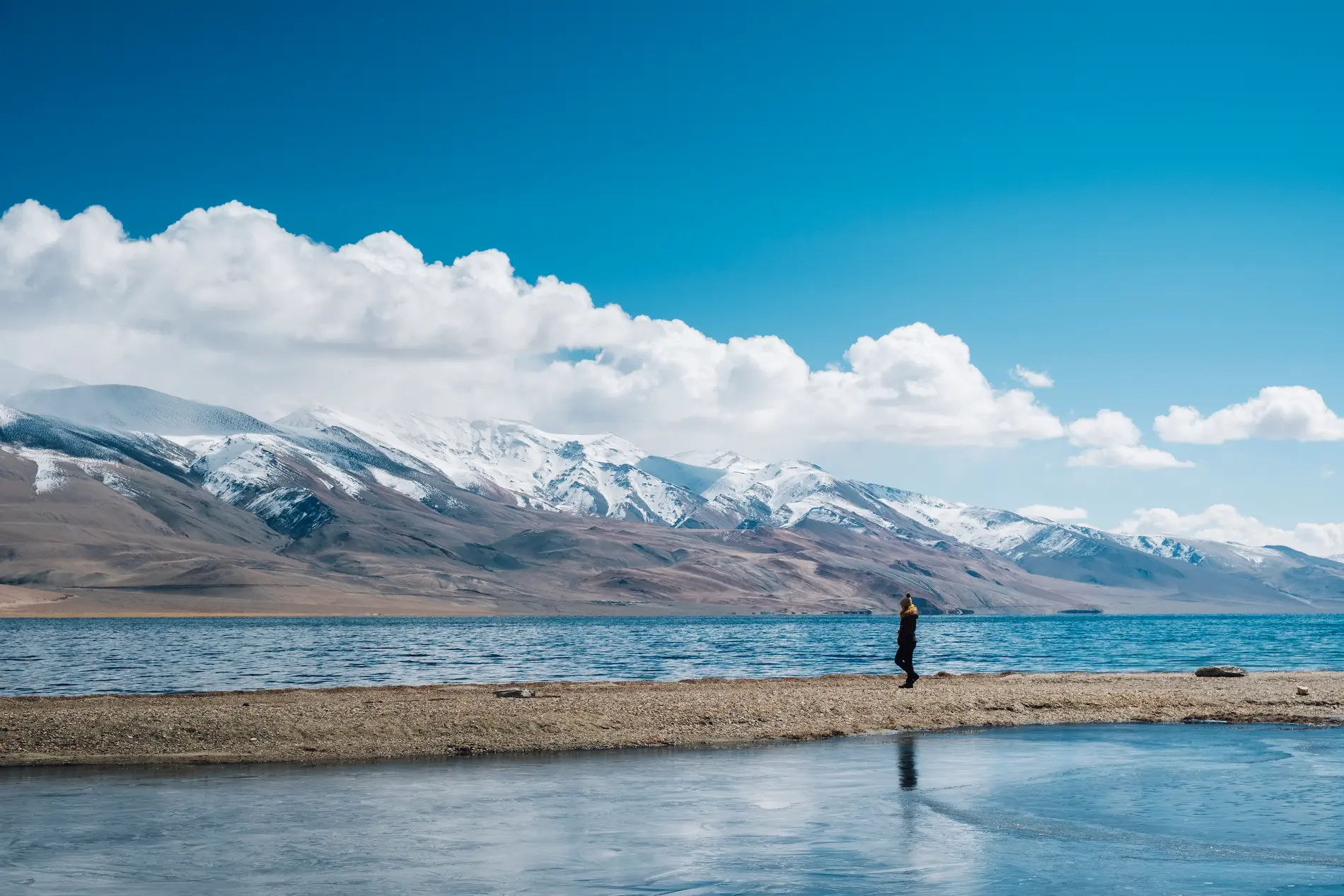
At sunset, the mountains behind the lake turn a burnt orange. At night, if you switch off all lights, you can hear gentle waves and see a sky full of stars reflected faintly on the water.
Pangong can be touristy at popular stretches, yes. But if you walk a little away, sit quietly, and just watch, it becomes something else – a huge, deep mirror holding sky and mountain both.
Hanle & The Dark Sky
If Pangong is where water and light meet, Hanle is where sky and silence meet.
This small, remote village has become famous as India’s first Dark Sky Reserve. But numbers and titles can’t capture the feeling.
The road to Hanle passes through open plains and remote villages. By the time you reach your homestay, everything feels far away:
No city noise.
No tall buildings.
Often, not even bright electricity after a point.
At night, when you step out:
The Milky Way appears like a milky river flowing above you.
Shooting stars cross the sky every few minutes.
The silence is so deep you almost hear your own heartbeat louder.
In the day, you can visit:
Hanle Monastery sits calmly above the village.
A high altitude observatory, where scientists peer at the same sky with telescopes.
Hanle is not for those who need malls. It is for those who want to be reminded how small and lucky we are.
Tso Moriri & Tso Kar
Far in the Rupshu valley, Tso Moriri rests like a long, wise elder.
It is quieter than Pangong, less visited, and more self-contained.
You drive along vast, empty stretches, sometimes spotting wild kiangs running in small groups, or flocks of birds moving in sudden unison. When the lake finally reveals itself, it feels like a private moment – a deep blue body of water held by open slopes and big sky.
Nearby Tso Kar has a different character:
White salt edges
Rough winds
Open plains where you can see the curvature of the land in your peripheral vision
Together, they give you a sense of Ladakh beyond the usual postcards.
There are many more spots – Alchi’s old paintings, Lamayuru’s moonscapes, Stok Village’s quiet lanes and big Buddha statue, Puga’s steaming springs. But even if you just cover:
Leh & monasteries
Nubra & Turtuk
Pangong
Hanle
Tso Moriri / Tso Kar
…you’ll return with a heart full of Ladakh.
Leh Ladakh Trip Cost & Budget
Talking about the Leh Ladakh trip cost can feel tricky because no two trips are exactly the same. But we can at least build a framework.
What Affects the Cost?
Season
Peak season (June–August) vs shoulder (April–May, Sept–Oct) vs winter.
Trip Style
Budget / mid-range/luxury.
Homestay vibe or fancy boutique stays.
Transport Type
Shared taxis, group departures.
Private SUV or tempo traveller.
Self-drive or bike rental + backup.
Duration
4 days vs 10 days makes a big difference in stay and travel costs.
Starting Point
Ex‑Leh (you arrange flights).
Ex‑Delhi / Ex‑Manali / Ex‑Srinagar (overland adds days and costs).
Extras
Permits.
Entry fees (monasteries, museums).
Optional activities (ATVs, rafting, extra sightseeing).
Food at cafes, snacks, and shopping.
Simple Way to Plan a Budget
Think of your cost in two parts:
Package cost – what you pay the operator for: stays, transport, some meals, permits, and planning.
Personal extras – shopping, extra café meals, tips, etc.
A rough mental picture for a mid-range Leh Ladakh package (not hard numbers, just guidance):
The cost per day per person often includes:
Shared or private vehicle
Stay with breakfast (and sometimes dinner)
Driver, fuel, basic entrance fees
Permit arrangements
Then, you add:
Your flight/train cost to reach the starting point.
Personal spending during the trip.
The most honest approach is:
Fix your date range and style (family/honeymoon/bike/luxury).
Share with your operator.
Ask for a transparent breakup and what is included/excluded.
Permits, AMS & Safety
Ladakh looks wild and free, but it is also a border region and a high-altitude landscape. That means permits and health precautions are important.
Inner Line Permits & Local Rules
Some areas in Ladakh are close to the borders and considered sensitive. Places like:
Nubra Valley
Pangong Tso
Turtuk
Hanle
Tso Moriri / Tso Kar
…often require an inner line permit or similar permissions (rules change year by year).
Most travellers now prefer to let their tour operator handle permits:
It avoids confusion.
It ensures permits are applied for in time.
Drivers know which checkposts will ask for what.
As a traveller, just be sure you:
Carry the necessary ID proofs (Aadhaar/passport).
Keep some photocopies as backup.
We are aware that sometimes certain routes can be closed or restricted at short notice due to security/weather.
AMS (Acute Mountain Sickness) – Being Gentle with Your Body
High altitude is like a strict but fair teacher.
If you respect the rules, it treats you kindly.
Basic rules for AMS safety in Ladakh:
Give yourself one full day in Leh to acclimatise. No crazy sightseeing on arrival day.
Drink water regularly. Keep your body lightly hydrated.
Eat simple, warm food. Avoid overeating, and avoid alcohol in the first 24–48 hours.
Climb stairs slowly. No running races with friends.
If you feel a headache, nausea, unusual tiredness, or dizziness – don’t ignore it. Tell your guide or tour leader.
Good itineraries naturally:
Rise gradually in terms of overnight stays.
Visit extremely high points during the day, but don’t sleep there unnecessarily.
If anyone in your group has heart, lung, or serious medical conditions, always consult a doctor before planning and mention it clearly to your operator.
Road & Weather Safety
Many accidents in the mountains are not about driving skill, but about rushing or ignoring conditions.
Basic road wisdom in Ladakh:
Start early on long drive days.
Respect signals from BRO (Border Roads Organisation) and local administration.
If there is fresh snow or a strong warning, don’t push “just one more pass today.”
Trust your local driver when they say, “Aaj yahan tak hi sahi rahega” (Today, it’s better to go only this far).
And if you are on a bike trip:
Never compromise on helmets and protective gear.
Keep a distance from the bike in front of you, especially on gravel and water crossings.
Don’t let peer pressure push you into speeds or stunts that your gut says no to.
The mountains will still be there tomorrow.
Reach safely, rest well, and enjoy them fully.
What to Pack for a Leh Ladakh Trip
Packing for Ladakh is about layers, comfort, and practicality. You don’t need to carry your entire wardrobe, but you do need the right pieces.
Clothing – Layer Up
Inner layers:
Cotton or dry-fit t-shirts
Thermal innerwear (top and bottom) for nights and passes
Middle layers:
Fleece or light woollen sweaters
Sweatshirt/hoodie
Outer layer:
A windproof, water-resistant jacket (your best friend in wind and surprise rain/snow)
Bottoms:
Comfortable trekking pants/track, pants/jeans
Thermal leggings/inners for colder days or nights
Even in June–September, nights around Pangong, Hanle, Tso Moriri can be very cold, so don’t underestimate warm layers.
Footwear
A good pair of sports or trekking shoes with grip.
A spare pair of floaters/chappals for room use.
3–4 pairs of socks (include at least 1–2 woollen pairs).
In very early/late season or in winter:
Local gumboots can often be rented if needed near certain snow zones.
Accessories
A woollen cap that covers the ears
Gloves (woollen or fleece, maybe waterproof shell in colder months)
Sun cap/hat for daytime
Sunglasses (UV protection is important at altitude)
Scarf/buff to cover neck and mouth in dusty or windy stretches
Toiletries & Health
Sunscreen (high SPF – the sun is strong here).
Lip balm (the air is dry and lips crack easily).
Moisturiser (face & hands).
Your usual personal medicines + any altitude-related prescriptions your doctor suggests.
Basic first‑aid: band‑aids, antiseptic lotion, pain relievers, etc.
Documents & Money
Government ID (Aadhaar, driving licence, passport) – keep original + 2–3 photocopies.
A few passport photos in case required for permits.
Cash – ATMs can be patchy outside Leh; even in Leh, they can run dry on peak days.
Gadgets & Extras
Mobile phone + power bank
Camera + extra memory card + extra batteries (cold drains batteries faster)
Chargers and a small extension board (useful in rooms with limited sockets)
Reusable water bottle – staying hydrated is very important.
For bike trips:
Proper riding jacket and pants with armour
Riding gloves, knee, and elbow guards
Good helmet with clear visor (carry a spare smoked visor/sunglasses for daytime)
Rain cover for luggage
FAQs – Real Questions Travellers Ask About Leh Ladakh
1. How many days are enough for Leh Ladakh?
4–5 days: Enough for a short Leh + one major side tour trip.
6–7 days: Best for a first full Leh–Nubra–Pangong circuit.
8–9 days: Great for honeymoon and family trips with a slower pace and maybe one offbeat addition.
10–12 days: Ideal for road trips, bike tours, and deeper exploration (Hanle, Tso Moriri, Tso Kar, Manali/Srinagar routes).
2. What is the best time to visit Leh Ladakh?
For most people, the best time is:
June to September – All routes open, weather manageable, full itinerary options.
For fewer crowds and very clear skies:
September to early October – Shoulder season, lovely light, quieter.
For winter experience (Leh only with limited side trips):
December to February – Very cold, but a unique charm.
3. Is Leh Ladakh safe for families and kids?
Yes, Leh Ladakh can be safe for families if:
You choose the right season (June–September).
Keep an acclimatisation day in Leh.
Don’t rush the itinerary.
Travel with reliable drivers and a well-planned route.
Children often enjoy the open spaces, camels in Nubra, lakeside walks at Pangong, and the novelty of snow. Just keep them warm, hydrated, and don’t overexert them.
4. Is Leh Ladakh good for a honeymoon?
Absolutely!
A Ladakh honeymoon is different from a typical beach honeymoon. It is about:
Quiet evenings under endless stars.
Walking hand‑in‑hand near Pangong or Tso Moriri.
Sharing that first thin‑air breath at Khardung La and laughing about how slowly you’re both climbing stairs.
Just pick:
A good season (June–September, or winter in Leh‑, only if you both love cold).
A relaxed itinerary with fewer hotel changes.
Stays that feel cosy and comfortable, not just functional.
5. Do I need to be super fit for Leh Ladakh?
You don’t have to be an athlete, but basic fitness helps.
If you can walk 20–30 minutes at a stretch in your city without getting breathless, you’ll usually do fine with a well-paced itinerary.
Severe medical conditions (heart, lung, uncontrolled BP, etc.) need a doctor’s opinion before travel.
Remember:
Altitude can make even small tasks feel harder.
Take it slow, especially in the first 1–2 days.
Let your body adapt.
6. Do I get a mobile network and internet in Ladakh?
In Leh town, you will get a network and some Wi‑Fi (speed and stability vary).
In Nubra, Pangong, Hanle, and Tso Moriri, the network is often patchy or absent.
Treat Ladakh as a chance to:
Be a little more offline.
Talk to your travel mates and locals.
Look at the stars more than screens.
If connectivity is critical for you, discuss with your operator about which networks work best currently.
7. Is a Leh Ladakh bike trip very risky?
A Leh-Ladakh bike trip is demanding but not impossible.
You should:
Have decent prior riding experience.
Be comfortable with long hours on the bike.
Respect the weather and road conditions.
Travel with reliable bikes and backup support (especially on Manali–Leh and offbeat routes).
If you are a complete beginner, it might be better to:
Do a shorter ex‑Leh bike ride first
Or travel by car now, and come back later for a full bike expedition.
Our Leh Ladakh Tour Packages – Curated Circuits to Match This Guide
If reading all this makes you think:
“This is amazing, but I’d like someone who knows Ladakh well to handle the actual ground planning.”
…that’s exactly what curated Leh Ladakh tour packages are for.
Instead of you worrying about:
Which route is open this week
Where to stay that is safe and comfortable
How to balance acclimatisation and sightseeing
How to manage permits, driver timing, and buffer days
…you can choose a tested circuit that already follows all the good practices you just read.
Here’s how your existing Ladakh portfolio maps to this guide (you already shared these):
Classic Ex‑Leh & Overland Circuits
Leh Nubra Pangong Tour Package (6D/5N)
Perfect for first‑flyers flying into Leh. Covers Leh, Nubra Valley, and Pangong Tso with a thoughtful pace, including acclimatisation and key sights like Shanti Stupa, Hall of Fame, Diskit Monastery, and Hunder dunes.
URL: Leh Nubra Pangong Tour Package
Srinagar–Kargil–Leh Road Trip Package (7D/6N)
Great if you want to start from Kashmir, move gently via Kargil and Lamayuru, and then explore Leh with local sightseeing.
URL: Srinagar to Leh Road Trip Package via Kargil
Manali to Leh Nubra Pangong Tour Package (8D/7N)
For travellers who want the Manali–Leh highway experience plus classic Nubra and Pangong, packed into one premium overland Ladakh tour.
URL: Manali to Leh Nubra Pangong Tour Package
Bike Expeditions
Leh Ladakh Bike Trip Ex Leh – Nubra, Pangong, Hanle & Tso Moriri (10N/11D)
Ideal for riders who want to fly into Leh and tackle a full, challenging but rewarding ring: Nubra, Pangong, Hanle Dark Sky, Tso Moriri, and beyond – with backup support and permits managed.
URL: Leh Ladakh Bike Trip Ex Leh
Manali–Leh–Manali Bike Expedition – Hanle & Umling La (12D)
For serious bikers who want the full Manali–Leh journey, Nubra, Pangong, remote Hanle, and even Umling La, in a structured, backed-up expedition format.
URL: Manali Leh Manali Bike Trip
Family & Honeymoon Specials
Ladakh Family Tour Package with Turtuk (7D/6N)
Crafted with families in mind: kid-friendly pacing, private SUV, handpicked family stays, time in Nubra, Pangong, and the soft, cultural charm of Turtuk.
URL: Ladakh Family Tour Package with Turtuk
Ladakh Honeymoon Tour Package (8N/9D)
A slow, romantic circuit including Leh, Nubra, Pangong, and often more offbeat, peaceful places like Hanle or Tso Moriri – built for couples who want both scenery and intimate, quiet time together.
URL: Ladakh Honeymoon Tour Package
Offbeat, Stargazing & Winter
Hanle Pangong Tso Moriri (Dark Sky Ladakh) Tour Package
For travellers who have either already seen classic Ladakh or want to go straight for deeper, remote experiences – lake-side drives, Hanle Dark Sky Reserve, and wild, open landscapes around Tso Moriri.
URL: Hanle Pangong Tso Moriri Tour Package
Leh Winter Experience with Pangong Day Trip (5–6 Days)
A short, carefully planned winter-only Leh Ladakh package that lets you feel Ladakh’s winter mood, visit Pangong safely as a day trip, and enjoy warm, cosy evenings in Leh.
URL: Leh Winter Experience with Pangong Day Trip