

Karan
Writer
Updated On - Dec 31, 2025
25 min
Published On - Aug 28, 2025
Kedarnath Yatra 2026: A Pilgrim’s Journey to the Abode of Shiva
Kedarnath Yatra: A Pilgrim’s Journey to the Abode of Shiva – A BizareXpedition™ Travelogue & Guide is your ultimate companion to one of India’s most sacred and challenging pilgrimages. This immersive guide blends heartfelt storytelling with essential practical advice, drawing directly from real experiences and local insights
Chapter 1 – The Road to Kedarnath
Chapter 2 – From Gaurikund to Kedarnath
Chapter 3 – Nearby Attractions in Kedarnath
Chapter 4 – Culture & Food
Chapter 5 – Practical Travel Guide to Kedarnath Yatra
Chapter 6 – Conclusion
Kedarnath Yatra: A Pilgrim’s Journey to the Abode of Shiva – A BizareXpedition™ Travelogue & Guide is your ultimate companion to one of India’s most sacred and challenging pilgrimages. This immersive guide blends heartfelt storytelling with essential practical advice, drawing directly from real experiences and local insights.
Inside, you will Commenceon a journey that covers:
· The Epic Road Trip: From Rishikesh through the sacred confluences of Devprayag and Rudraprayag, to the spiritual gateways of Guptkashi and Sonprayag.
· The Sacred Trek: A step‑by‑step narrative of the challenging yet rewarding 16 km climb from Gaurikund to the Kedarnath shrine, detailing every halt and emotion.
· Beyond the Temple: Explore the guardian Bhairavnath Temple, the serene Gandhi Sarovar, the remote Vasuki Tal, and the historical Adi Shankaracharya Samadhi.
· Culture & Cuisine: Dive into the simple yet soulful Garhwali food, the warmth of dhaba stories, and the vibrant rituals and festivals that define the Yatra.
Practical Planning: Comprehensive details on the best time to visit, how to reach (trek, pony, helicopter), accommodation options, suggested itineraries (3, 5, and 7 days), budget breakdowns, safety tips, and essential do’s and don’ts.
Chapter 1 – The Road to Kedarnath
1. Beginning the Journey – Leaving the Plains
Every Yatra begins with a call. Kedarnath’s call is louder than most; it’s not just a temple, but a test of faith, patience, and endurance.
When I left Rishikesh, the crisp Himalayan air already smelled of incense and devotion. Pilgrims with malas around their necks and saffron flags on jeeps crowded the streets. Loudspeakers called out “Har Har Mahadev,” shopkeepers sold rudraksha and copper lotas, and chants floated alongside the sound of the Ganga crashing on rocks.
Driving out in a car gave both freedom and worry—freedom to stop anywhere, but worry about the ever‑changing mountain roads. With a steering wheel in hand and the Ganga on one side, the journey toward Kedarnath began.
2. Devprayag – Sangam of Faith
The first major halt was Devprayag, where the Bhagirathi and Alaknanda rivers meet to give birth to the Ganga. Standing there, you can literally see two rivers, each a different shade—one green, one muddy—fusing into one.
I stopped at a roadside stall serving steaming chai in small glasses. The owner, an old man with a tilak on his forehead, smiled knowingly.
“Baba Kedarnath ki yatra hai? Aaram se jaiye… upar har mod par Mahadev khud hain.”
(Is this for Baba Kedarnath Yatra? Go slowly; at every turn, Lord Shiva protects you.)
His words struck deep; the Himalayas are never just geology—they’re guardians.
BizareXpedition™ Reflection: Always pause at Devprayag, not only for the view, but for the reminder that the Yatra is about surrender, not speed.The first major halt was Devprayag, where the Bhagirathi and Alaknanda rivers meet to give birth to the Ganga. Standing there, you can literally see two rivers, each a different shade—one green, one muddy—fusing into one.
I stopped at a roadside stall serving steaming chai in small glasses. The owner, an old man with a tilak on his forehead, smiled knowingly.
“Baba Kedarnath ki yatra hai? Aaram se jaiye… upar har mod par Mahadev khud hain.”
(Is this for Baba Kedarnath Yatra? Go slowly; at every turn, Lord Shiva protects you.)
His words struck deep; the Himalayas are never just geology—they’re guardians.
BizareXpedition™ Reflection: Always pause at Devprayag, not only for the view, but for the reminder that the Yatra is about surrender, not speed.
3. Rudraprayag – Tales at the Confluence
Further ahead, the drive snaked towards Rudraprayag. The road narrowed, cliffs loomed taller, and the river rushed with more force below.
Rudraprayag, named after Lord Shiva (Rudra), greets you with temples and stories. It is here the Alaknanda meets the Mandakini. Pilgrims crowded the ghats, dipping feet and whispering prayers before continuing upward.
I stopped for lunch at a small dhaba—rajma, rice, and hot rotis glistening with ghee. The dhaba owner insisted:
“Rajma yahin ka khaayiye, pahadon ka swad hi alag hota hai.”
(Eat rajma here; mountain beans taste different from plains.)
And indeed, they did—earthier, warmer, somehow more filling
4. Weather Turns
Past Rudraprayag, the road grew rougher. Clouds rolled in, and drizzle dotted the windshield. Driving in mountains teaches trust—you trust your brakes, your eyes, and prayers muttered under the breath. Landslide‑scarred patches appeared often, with BRO (Border Roads Organization) signs warning: “We cut mountains, not your speed.”
Each bend tested patience; yet, every turn opened into breathtaking valleys. I rolled down the window, cold wind rushing in, bringing scents of pine, wet earth, and smoke from faraway kitchens.
5. Guptkashi – Gateway to Kedarnath
By evening, I reached Guptkashi, the gateway town before the final climb. Its name itself is myth—legend says Lord Shiva hid here from the Pandavas before appearing at Kedarnath.
I checked into a small guesthouse. The owner’s family served hot pahadi dal, aloo ki sabzi, and mandua rotis for dinner. They narrated Yatra tales—pilgrims walking barefoot, some chanting Mahadev’s name with every step, others arriving in helicopters but still carrying emotion in eyes.
Outside, clouds hid the peaks, but somewhere beyond them, Kedarnath waited
6. Sonprayag – Chaos of Hope
The next morning, the road wound another 30 km to Sonprayag. Here, cars can go no further. The place was full of energy—hundreds of pilgrims queued for shared jeeps to Gaurikund, some singing bhajans, others negotiating with pony owners.
Vendors sold raincoats, walking sticks, and cheap gloves—everything a trekker might need. The sound of the Mandakini river thundered nearby, roaring like the enthusiasm of the crowd.
I gulped down a bowl of Maggi and hot tea from a tin shack before boarding a jeep for the last motorable stretch. The driver, half smiling, warned: “Tayar ho jaiye. Asli pariksha to ab shuru hoti hai”—
(Get ready. The real test begins now.)
7. Gaurikund – The Trek Begins
Gaurikund, the base for the Kedarnath trek, was buzzing. Pilgrims washed in the hot springs believed to bless those beginning the climb. The small bazaar sold rain ponchos, woolen caps, rudraksha malas, sweets for puja, and walking sticks made from polished wood.
Looking up at the fog‑draped mountains in front of me, heart beating heavy, I realized: everything until now was the introduction. The real story begins when the feet move upward.
And so, with “Har Har Mahadev” echoing around, the trek to Kedarnath—12 km of devotion, challenge, and discovery—began.
Chapter 2 – From Gaurikund to Kedarnath
1. Gaurikund – The Sacred Start
The trailhead to Kedarnath is Gaurikund, a place both myth and reality. Pilgrims bathe in its kund (hot spring), believing it purifies body and mind before undertaking the sacred climb.
I watched people dip into steaming waters, some chanting, some shivering in cold, their faces glowing with faith. On the side lanes, shops sold steaming aloo‑parathas, packets of prasad, raincoats, woolen gloves, and long wooden sticks that would soon become trusted companions on the road.
The atmosphere was half fair, half prayer. Bells rang in the distance, “Har Har Mahadev” echoed around, and horse owners loudly called out:
“Pony available! Helicopter service also!”
But something inside me knew—the journey must be on foot. Because Kedarnath is not simply reached, it must be earned.
2. Jungle Chatti – Into the Woods
The trek began. The first steep steps tested my lungs quickly. My legs felt the weight of every breath, but alongside me thousands were walking—young, elderly, even kids, all bound by the same call: “Baba Kedarnath bulaye hain.”
Within two hours, I reached Jungle Chatti, the first major halt. A small cluster of tin-roof huts offered tea, biscuits, and water. The forest embraced everything—oak and rhododendrons so thick the sun barely entered. Donkey trains carrying supplies jingled past, bells on their necks keeping rhythm.
A dhaba owner handed me hot chai and smiled:
“Abhi to trailer hai… asli chadhai aage hai.”
(This is just the trailer, the real climb is ahead.)
I laughed nervously. Ahead, clouds swirled, and the path rose even sharper.
3. Bheembali – Sounds of Devotion
By noon, I trudged into Bheembali, about 6 km from Gaurikund. This had once been flattened by the 2013 floods, but now basic rest shelters and tin-roof eateries stand again.
Smoke from chulhas curled into the sky. Pilgrims rested, their tiredness softened by bowls of hot khichdi. A group of yatris from Maharashtra broke into bhajans, their dholak beats echoing through the valley. Even strangers joined in chorus—because in Kedarnath Yatra, devotion is the common language.
I sat at a dhaba eating rajma-chawal with pickle. The beans were small, red, grown in mountain soil. Tired though I was, every bite felt like strength returning.
BizareXpedition™ Tip: Carry light snacks, but don’t miss the joy of stopping for local meals on the way. Nothing tastes as good as food earned by sweat.
4. Linchauli – Clouds & Cliffs
The climb from Bheembali to Linchauli is where the trek gets raw.
The path narrows, carved into rocky cliffs. On one side, steep mountain wall; on the other, a drop into the thundering Mandakini river. Clouds descended quickly, covering everything in mist. For moments, I could see nothing but white fog—then suddenly the valley opened, revealing waterfalls gushing down black cliffs.
Sound dominated here: the ring of mule bells, the thunder of river, the cry of “Jai Baba Kedarnath!” from unseen pilgrims. Rain started—sharp, icy droplets soaking jackets and turning the trail slippery.
At Linchauli, temporary tents awaited tired pilgrims. It was a relief to sit on wooden benches, drink watery tea, and watch clouds swirl.
BizareXpedition™ Safety Note: Weather here changes within minutes. Always carry a poncho and start the trek early.
5. Garud Chatti – The Final Push
Toward evening, light faded as I reached Garud Chatti, the last major stop before Kedarnath.
It felt otherworldly—surrounded by snow walls and waterfalls, the path ascended steeply. Helicopters buzzed above occasionally, landing at the Kedarnath helipad, breaking the silence. But for us walkers, there was no shortcut.
Exhausted yatris lay wrapped in blankets on charpoys, sipping soup. An old sadhu sat cross‑legged under a tattered sheet, whispering “Om Namah Shivaya” non‑stop. His calmness contrasted our restlessness.
A young boy, barely 12, walked with his grandfather. The old man panted heavily but refused to stop. “Baba hi sambhalen gaye” (Shiva himself will carry me), he said, resting briefly on his stick. Watching them filled me with renewed determination.
6. The First Glimpse – Kedarnath Reveals Itself
And then, after 12 km and nearly 8 hours of climbing, the moment arrived.
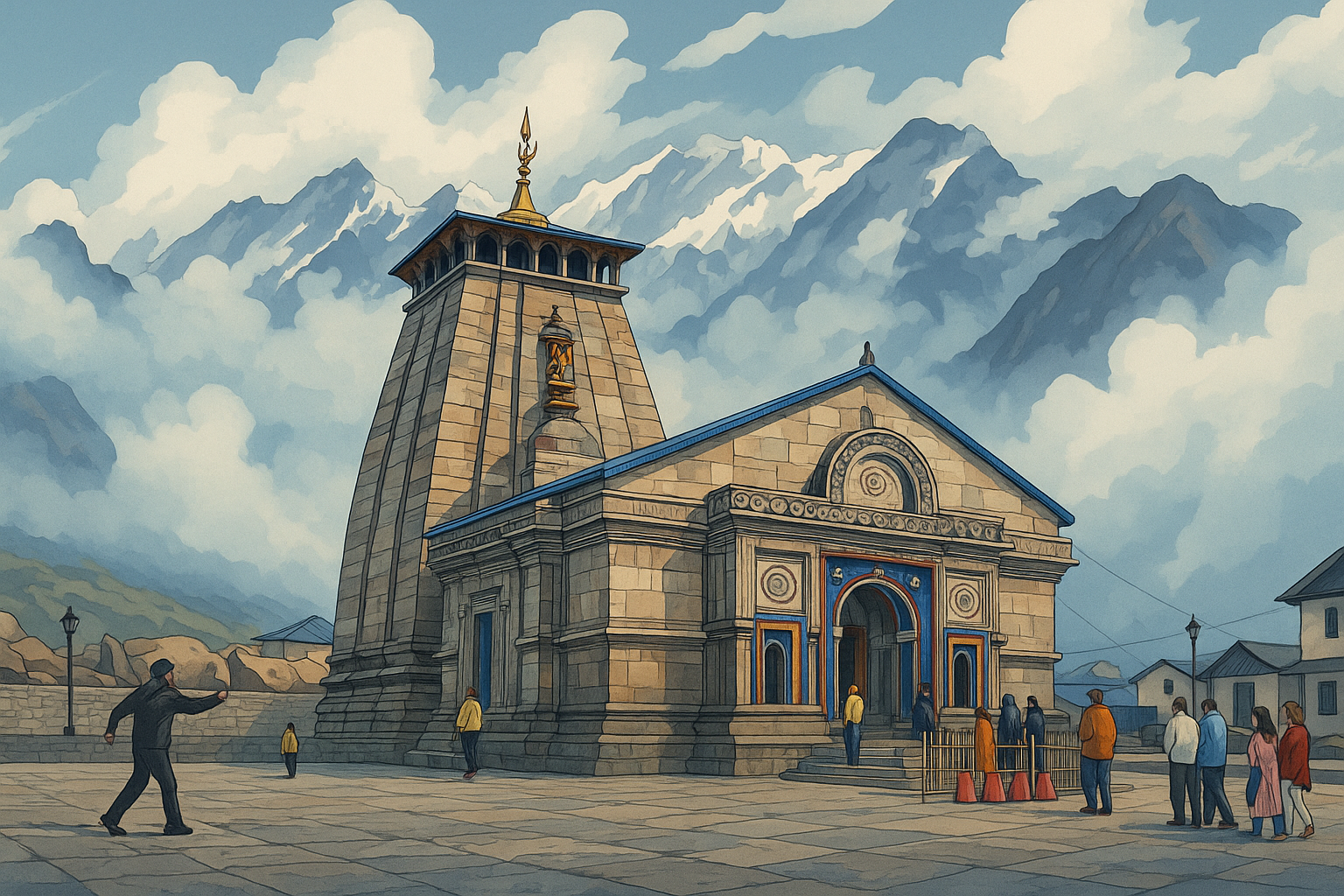
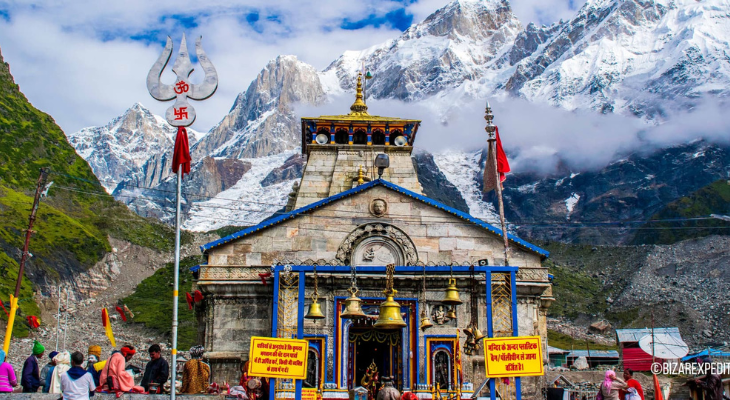
Through drifting clouds, I caught the first glimpse of Kedarnath temple—tiny, grey, sitting proud against the backdrop of towering snow peaks. Behind it loomed Kedarnath Dome, majestic and unforgiving.
Tears welled up. My legs forgot their pain. Around me pilgrims gasped, some folded hands instantly, some cried openly, some shouted “Har Har Mahadev!” with voices hoarse from the climb.
The sound of temple bells drifted faintly. The Yatra had transformed: it was no longer a trek; it was surrender.
7. Night at Kedarnath
I checked into the GMVN guesthouse, a modest concrete block with basic dormitories. The bed was hard, the blankets rough, but to a tired pilgrim, it felt like luxury. Hot dal and rice were served in steel plates. I ate silently, listening to stories from fellow yatris—some had walked barefoot, some doing the Yatra after recovering from illnesses, each narrating why Baba Kedarnath had called them.
Outside, cold winds howled. The temperature dropped below 0°C. But from the temple, bells still rang. Pilgrims queued even late at night, refusing to waste a minute near Mahadev’s home.
8. Temple by Night
Before sleeping, I walked into the temple courtyard. The stone shrine glowed under floodlights, with snow peaks shimmering behind in moonlight. The air was electric with chants of “Om Namah Shivaya.”
I placed my forehead on the cold stone ground. After the dust of the road, the pain of the climb, and the fatigue of body, this silence felt like peace flowing into veins.
In that moment, Kedarnath was not just a temple. It was presence.
Chapter 3 – Nearby Attractions in Kedarnath
1. Kedarnath Temple – The Soul of the Journey
No matter how many articles one reads about the Kedarnath shrine, nothing prepares you for standing before it.
The temple is built of massive grey stone slabs, standing stubbornly against snow, storms, and floods. Behind it rises the Kedarnath peak, snowy and radiant at dawn, dark and powerful at dusk.
The courtyard is always alive:
- Pilgrims line up, chanting “Har Har Mahadev.”
- The smell of ghee lamps and incense mixes with the sharp, icy air.
- Pandits move quickly, guiding pujas and abhisheks.
- Bells ring, their metallic sound echoing across the valley.
Inside, the Jyotirlinga sits—an uneven, self‑formed (swayambhu) stone, said to be the hump of Lord Shiva when he disappeared into the earth to evade the Pandavas. Touching it, smearing bilva leaves and ghee, isn’t just ritual—it feels like touching living stone, holding onto something eternal.
Legends that Breathe Here
- Myth says the Pandavas, after the Kurukshetra war, sought Shiva for forgiveness. He hid here in Kedarnath, taking the form of a bull. When they chased, he dived into the ground, leaving his hump behind—becoming the linga of Kedarnath. His arms appeared in Tungnath, navel in Madhmaheshwar, face in Rudranath, and hair in Kalpeshwar—together forming the Panch Kedar.
- Another belief: Adi Shankaracharya revived worship here in the 8th century, and his samadhi still lies behind the temple.
Standing there, these myths no longer felt like stories—they lived in the chants, in the cracked stone walls, in the eyes of weeping devotees.
BizareXpedition™ Reflection: Kedarnath is not a temple you only see—it is a place that sees you back.
2. Bhairavnath Temple – Guardian of Kedarnath
A short but steep climb from the Kedarnath shrine takes you to the Bhairavnath Temple. The path itself is beautiful—stone steps winding upward, with valleys opening below.
Legend says Bhairavnath is the protector of Kedarnath, guarding the shrine from natural calamities and evil forces. From here, the view is unmatched: the entire temple complex below, the Mandakini river valley stretching endlessly, and the snowy peaks glowing.
One monk sitting there said to me,
“Baba Bhairav roop mein yahan hamesha hain, isi liye pandrah saal baad ke mahabhinash (2013 floods) ke baad bhi Kedar bach gaya.”
(Bhairavnath always protects this shrine, that’s why even during the terrible 2013 floods, Kedarnath temple survived.)
The view, the wind, and the silence made his words feel true.
3. Gandhi Sarovar (Chorabari Tal) – Lake of Memories
About a 3 km trek from Kedarnath leads to Gandhi Sarovar, also called Chorabari Tal. The path winds upward, crossing streams and meadows, with snow peaks reflecting in the clear waters.
This lake is where the ashes of Mahatma Gandhi were immersed, which gave it the name Gandhi Sarovar. But spiritually, locals believe it is where sages meditated, where stillness carried prayers into the sky.
I sat by the cold waters, the lake shimmering under blue skies, and thought: this is exactly why sages chose the Himalayas—because silence here speaks.
Safety Note: The trail can be tricky. Always start early morning, as weather changes fast by noon.
4. Vasuki Tal – A Hidden Gem
Further, for trekkers with stamina, lies Vasuki Tal, about 7 km from Kedarnath. The path is steep and often snow‑covered, but the reward is extraordinary—a high‑altitude glacial lake, surrounded by mountains, reflecting the grandeur of Chaukhamba peak.
Local lore says Lord Vishnu bathed here during Raksha Bandhan festival, hence the name Vasuki. Few pilgrims attempt it, but those who do describe it as surreal: absolute silence, broken only by wind and prayer flags fluttering.
BizareXpedition™ always recommends Vasuki Tal for trekkers seeking solitude after the crowded temple visit.
5. Adi Shankaracharya Samadhi
Behind the main Kedarnath temple lies a modest yet deeply emotional spot: the samadhi of Adi Shankaracharya.
It was here, after reviving Kedarnath in the 8th century, that Shankaracharya is believed to have merged into the ground at just 32 years of age. A simple statue now marks the place. Pilgrims bow quietly, understanding that without him, Kedarnath may not have survived into modern devotion.
Surrounded by snow‑clad peaks, it feels like the Himalayas themselves are bowing in respect.
6. Helicopter Yatra – Flying to Faith
Not everyone can trek the 16 km uphill. For them, helicopter rides operate from Guptkashi, Phata, or Sitapur.
I once boarded a shuttle at Phata helipad. The entire journey took 8 minutes—barely enough to register distance, but certainly enough to feel awe.
From the chopper window, the Mandakini valley appeared like a green ribbon, cliffs dropped dramatically, waterfalls split mountains, and then—suddenly—the Kedarnath temple revealed itself like a tiny grey jewel below massive white peaks.
Landing near the temple felt unreal. While trekkers arrived sweaty and exhausted, I stepped down fresh but humbled—and almost guilty. Because part of the Yatra’s meaning is in its difficulty.
BizareXpedition™ Note: Helicopter services are convenient for elders or those unfit for trek, but if your body allows, always walk. Pain makes the darshan sweeter.
7. Kedarnath Market – Small Yet Vibrant
Despite its altitude, Kedarnath has a lively bazaar lane near the temple.
What you’ll find:
· Rudraksha malas, brass idols, copper lotas for puja.
· Woollen socks, gloves, and mufflers knitted by locals.
· Shops selling chai, pakoras, rajma‑chawal, and Maggi.
· Stalls with photographs and miniature stone replicas of the temple.
At night, dim yellow bulbs glow over these shops as pilgrims bargain lightly, eat steaming food, and chat with strangers. The market may be small, but the warmth it holds is enormous.
8. Evenings in Kedarnath
Evenings at Kedarnath are unlike anywhere else.
The Aarti begins as priests carry lamps around the temple. Rows of diyas flicker in icy air, chants rise, bells clash in rhythmic unison. Pilgrims press together, eyes moist, hands folded.
Behind the temple, the snowy Kedarnath peak glows pink in the last light, as if Shiva himself is present. After Aarti, pilgrims sit silently in courtyard corners, unwilling to leave despite the biting cold.
That night, as I walked back to the guesthouse, I turned again and again to steal one more glimpse. Because Kedarnath doesn’t just bless in darshan—it lingers in you.
9. Summary of Experiences (BizareXpedition™ Travel Notes)
· Kedarnath Temple: Heart of Yatra, Jyotirlinga linga, ancient myths.
· Bhairavnath Temple: Guardian deity, with breathtaking panoramic views.
· Gandhi Sarovar: Peaceful lake, 3 km trek, historically tied to Gandhi.
· Vasuki Tal: High‑altitude lake, steep trek, ultimate solitude.
· Adi Shankaracharya Samadhi: Spiritual cornerstone behind the temple.
· Helicopter Ride: Practical for elders, visually stunning.
· Kedarnath Market: Simple shops, steaming food, souvenirs.
· Evening Aarti: A once‑in‑a‑lifetime moment of divinity.
Chapter 4 – Culture & Food
1. Food That Warms the Soul
At 11,000 feet above sea level, food is not just taste—it is survival, comfort, and shared joy. In Kedarnath, meals are simple, home‑like, yet deeply satisfying.
Local Highlights You Encounter
- Pahadi Rajma – Small, red beans cooked slowly till soft, almost melting. Served with rice, they fill both stomach and spirit. Many pilgrims swear rajma in Kedarnath tastes different—perhaps it’s the soil, perhaps the altitude, or simply the hunger after the trek.
- Mandua (Finger Millet) Roti – Dark, earthy flatbread rich in nutrition. Locals eat it daily; though slightly coarse, when paired with ghee, it becomes comfort food.
- Pahadi Dal & Dubke – Lentils like bhatt (black soybeans) or gahat (horsegram), cooked into thick curries. High in protein to fight the cold.
- Aloo ke Gutke – Fried potato cubes with red chilli and coriander, crunchy and spicy. A favourite quick snack at wayside dhabas.
- Chutneys of Bhang and Til – Ground from hemp seeds or sesame, with fiery green chillies, adding a nutty kick to meals.
- Kheer made with hill milk – Rich and heavy, often offered during temple bhandaara.
And then, there is prasad: soft pedas made from khoya, sometimes wrapped in dried leaves. A handful of this prasad given in the temple feels heavier than any sweet from a city sweet shop—it is sanctified, warmed with devotion.
BizareXpedition™ Tip: Don’t carry packaged meals all the way. Relish the joy of sitting cross‑legged in a crowded dhaba, sharing rajma with strangers—it is the real taste of Yatra.
2. Dhaba Stories: Memories Served with Tea
Along the trek—at Jungle Chatti, Bheembali, Linchauli—you’ll find small tea shops with smoky interiors, aluminum kettles whistling constantly, and men shouting “chai‑pakoda ready!”
One such stop remains etched in memory. Rain had drenched everything; I shivered as I entered a tin‑roof dhaba. The owner, a young boy, served tea so hot it fogged my glasses. When I asked him if business was tough, he smiled, “Baba ke charanon mein seva hai, vyapar nahin.” (This is service at Baba’s feet, not business.)
That answer stayed with me longer than the taste of the chai.
3. Rituals & Festivals
The Kedarnath valley is alive with festivals and rituals that keep devotion rhythmic through the year.
- Opening Ceremony (April/May): The idol of Lord Kedarnath is carried from Ukhimath, where it stays during winter, to Kedarnath in a grand procession. Villagers line the route, offering flowers and chanting. This is perhaps the valley’s most emotional time—the god returns home.
- Shravan Month (July–August): Special pujas dedicated to Lord Shiva, with yatris offering bilva leaves and ghee.
- Diwali: While the plains celebrate with fireworks, Kedarnath prepares to close. The idol is carried back to Ukhimath; lamps flicker sadly, marking departure. It feels like farewelling a loved family member.
- Nanda Devi Raj Jat (in wider Garhwal): Though more rooted in Chamoli, echoes of this centuries‑old pilgrimage are felt in all Shiva shrines. Women offer flowers and songs to the goddess who journeys to her husband’s home in the Himalayas.
The rituals in Kedarnath teach patience: the temple doesn’t stay open year‑round. Faith adapts to nature. Gods too migrate with seasons—an idea unique to these mountains.
4. Local Culture & Everyday Life
Spending nights in Guptkashi or nearby villages before the trek, you sense the daily rhythm:
- Women dressed in colourful pichhoras carry headloads of fodder.
- Children, cheeks red from the cold, skip school to sometimes help families host yatris.
- Men either guide pilgrims, run mule services, or keep small shops with tea, torches, raincoats.
Evenings are often about community: dhuno (frankincense smoke) fills the air, temple bells ring rhythmically, and hymns echo across valleys.
Locals say: The mountains are not just geography; they are guardians. Every story, every custom ties back to Lord Shiva’s presence.
5. The Sacred Soundscape
Culture in Kedarnath is also what you hear:
· The periodic shouting of “Har Har Mahadev!” that rises like thunder from groups of yatris.
· The slow jingling bells of mules.
· Priests chanting mantras with closed eyes.
· Bhajans sung in different accents—Gujarati, Marathi, Bengali—blending into one devotional chorus.
At night, silence takes over, broken only by rushing winds and humming of rivers. That silence is also part of culture: one learns to pray without words.
6. Bhandaara Experiences
One unforgettable cultural moment is sitting at a bhandaara. Volunteers serve food to all—pilgrims, locals, rich, poor—no difference.
I sat cross‑legged on the floor, steel plate before me. Hot rotis, dal, sabzi, and kheer ladled generously. The man serving smiled: “Yeh Baba ki seva hai, khichdi bhi raajbhog ban jati hai.” (When served for Shiva, even khichdi tastes divine.)
Truly, it did.
BizareXpedition™ Reflection: Culture here is not museums or theatres—it’s humility expressed through food and community.
7. Summary of Culture & Food
· Cuisine: Nutrient‑packed pahadi staples (rajma, mandua, bhatt dal).
· Prasad & Bhandaara: Simple food elevated by devotion.
· Festivals: Idol procession, Shravan rituals, Diwali closure.
· Daily Life: Villagers as caretakers of Yatra routes.
· Sounds: Bells, chants, silences—each sacred.
Chapter 5 – Practical Travel Guide to Kedarnath Yatra
1. Best Time to Visit
The Kedarnath temple remains open only six months in a year — from April/May to October/November.
- Summer (May–June): The most popular time. Snow melts, trails open, skies are relatively clear. Pleasant weather, though afternoons can get hot on lower stretches. Perfect for families and first‑timers.
- Monsoon (July–August): Heavy rains, frequent landslides, risky treks. Best avoided. Pilgrimages thin during this time.
- Autumn (September–October): Ideal season. Crisp air, clear views of snow peaks, fewer crowds, comfortable trekking. This is when nature displays her best colors.
- Pre‑Winter (November, just before closure): Chilly, but peaceful. Pilgrims who prefer smaller crowds will enjoy this. Keep in mind, snowfall can start by late October.
BizareXpedition™ Tip: Always check official opening & closing dates announced by the Kedarnath Temple Committee each year.
2. How to Reach Kedarnath
By Air
- Nearest airport: Jolly Grant Airport, Dehradun (~240 km from Gaurikund).
- Daily flights connect Dehradun to Delhi, Lucknow, and other big cities.
By Rail
- Nearest major railway station: Rishikesh (~210 km away).
- Haridwar is another option, connected to most Indian cities.
By Road
From Rishikesh/Haridwar → Devprayag → Srinagar → Rudraprayag → Guptkashi → Sonprayag → Gaurikund.
- Regular buses and shared jeeps operate up to Sonprayag.
- From Sonprayag, local jeeps take pilgrims 5 km to Gaurikund (the trek’s starting point).
Trekking/Alternate Options
- Trek: 16 km from Gaurikund (moderate to tough, 6–8 hours).
- Ponies/Dolis: Available at Gaurikund for those unable to trek.
- Helicopter: Services from Phata, Guptkashi, Sitapur. Flight time ~8–10 minutes.
3. What to Pack
Clothing:
- Warm woollens (sweaters, jackets, thermal wear).
- Raincoat/poncho and waterproof shoes.
- Woollen socks, mufflers, gloves.
- Extra layers even in summer months.
Accessories:
- Walking stick (can buy cheaply at Gaurikund).
- Torchlight/headlamp.
- Sunglasses, sunscreen, cap.
- Reusable water bottle, energy bars, dry fruits.
Medical:
- Prescribed medicines, paracetamol, pain balms.
- Camphor/ajwain to ease breathing at altitude.
- First‑aid kit with band‑aids & Dettol.
BizareXpedition™ Safety Note: Weather at high altitude can change in 15 minutes. Always carry layers.
4. Accommodation
Budget Options
- GMVN (Garhwal Mandal Vikas Nigam) lodges at Gaurikund, Sonprayag, and Kedarnath. Basic rooms/dorms, ₹800–1,200 per night.
- Dharamshalas and ashrams: modest, community‑style stays, often by donation.
Mid‑Range Options
- Guesthouses at Guptkashi (₹1,500–2,500 per night).
- Camps/tents at Jungle Chatti, Bheembali, Linchauli (~₹1,000 for simple shelter).
Premium Options
- In recent years, some limited “deluxe tents” with attached bathrooms exist at Kedarnath (~₹3,500–5,000 per night).
- Helicopter yatris often book these for comfort.
BizareXpedition™ Tip: Pre‑book GMVN guesthouses online during season; accommodation at Kedarnath fills up quickly.
5. Food Options
Food in Kedarnath is basic but hearty. Expect:
- Rajma‑rice, dal, rotis, vegetable curries.
- Maggi noodles, pakoras, and tea at roadside stalls.
- Sweets like peda offered as temple prasad.
At various points on trek:
- Jungle Chatti: Tea, biscuits, light snacks.
- Bheembali: Rajma‑chawal, khichdi.
- Linchauli: Soups, tea.
Note: No non‑veg or alcohol is available/allowed on the Kedarnath route.
6. Suggested Itineraries
3‑Day Plan (Helicopter Option)
- Day 1: Haridwar → Guptkashi (overnight).
- Day 2: Fly by helicopter to Kedarnath, darshan & local sightseeing.
- Day 3: Return via helicopter and drive back to base.
Note : Please be informed that helicopter bookings are available only through https://heliyatra.irctc.co.in/.
5‑Day Plan (Balanced)
- Day 1: Haridwar/Rishikesh → Rudraprayag (stay).
- Day 2: Rudraprayag → Guptkashi (stay). Evening visit Ukhimath.
- Day 3: Drive to Sonprayag, trek from Gaurikund → Kedarnath. Evening darshan.
- Day 4: Morning puja, trek down, return to Guptkashi.
- Day 5: Drive back to Rishikesh/Haridwar.
7‑Day Plan (Immersive)
- Day 1: Haridwar → Devprayag → Srinagar (stay).
- Day 2: Srinagar → Guptkashi.
- Day 3: Guptkashi → Sonprayag → trek to Kedarnath (overnight).
- Day 4: Explore Bhairavnath Temple, Gandhi Sarovar, Shankaracharya Samadhi.
- Day 5: Trek down to Gaurikund, return Guptkashi.
- Day 6: Visit Triyuginarayan Temple & Chopta.
- Day 7: Return to Haridwar.
7. Budget Snapshot (Per Person, Approx.)
Transport:
- Shared jeep Haridwar–Sonprayag: ₹1,200–1,500.
- Private cab: ₹10,000–12,000 (round trip).
Accommodation:
- Budget dharamsala/GMVN: ₹800–1,200.
- Mid‑range: ₹1,500–2,500.
- Deluxe tents: ₹4,000–5,000.
Food: ~₹400–600 per day.
Pony/Doli: ₹3,000–6,000 (two‑way).
Helicopter Shuttle: ~₹7,000–8,500 (round‑trip per person).
Miscellaneous: Prasad, tips, rain gear, ~₹1,000.
Budget Traveller (3 nights): ₹6,000–7,500.
Comfort Traveller (5 nights): ₹15,000–18,000.
Luxury/Helicopter Traveller: ₹25,000+.
8. Safety Tips
· Start trek early (5–6 AM). Afternoon rain and fog reduce visibility.
· Carry adequate cash; ATMs at Sonprayag/Guptkashi often run out.
· Acclimatize—avoid rushing straight from plains to trek.
· Travel insurance covering altitude advisable.
· Don’t ignore altitude sickness—rest when dizzy, drink water.
9. Do’s & Don’ts
Do’s:
- Respect local traditions, dress modestly at temple.
- Carry reusable bottles, minimize plastic waste.
- Support local guides, mule owners, and shopkeepers.
- Join aarti at least once—it elevates the journey.
Don’ts:
- Don’t trek at night or during heavy rain.
- Don’t disturb mules/dolis—they carry backbones of Yatra.
- Don’t litter—Kedarnath is fragile; pack your waste.
- Don’t treat Yatra as picnic—the spirit is devotion.
Chapter 6 – Conclusion
As the final bell rang at Kedarnath temple, and the sound echoed across the icy valley, I stood still. The smoke of burning ghee lamps danced into the night, disappearing into the Himalayan winds. Behind the shrine, the mighty Kedarnath peak shimmered in silver moonlight, watching over as it has for centuries.
At that moment, I realized: Kedarnath is not a journey you simply complete — it is a journey that completes you.
1. Beyond Trek & Travel
Many people told me before coming: “It will be tough, the climb is long, the weather harsh.” They weren’t wrong. My legs ached after hours of trekking from Gaurikund, rain soaked through ponchos, and the cold was fierce at night.
But step after step, I learned what every pilgrim knows: pain slowly transforms into prayer. With each bend in the trail, fatigue fades into faith. And when you finally see the temple after that final push—it feels as though you’ve left behind not just kilometers, but also doubts, fears, and burdens.
Kedarnath teaches: true journeys are never about distance, they’re about surrender.
2. What Lingers
What lingers from Kedarnath is not only the darshan, but the small, hidden moments:
- The sweet steaming chai at Jungle Chatti after cold rain.
- The elderly man at Garud Chatti who said, “Baba will carry me.”
- The family in Guptkashi sharing mandua rotis with pride.
- The echo of “Har Har Mahadev” shouted by strangers, instantly uniting thousands.
These moments remain stitched into memory like beads of a mala, reminders of human kindness as much as divine presence.
3. A Temple Beyond Time
Standing before the grey stone shrine, one cannot help but think of history:
- How Adi Shankaracharya stood here centuries ago to revive Hindu faith.
- How even the catastrophic floods of 2013 spared the temple, as if Lord Shiva himself shielded it.
- How every year, the deity migrates with seasons, teaching us humans to adjust, to respect nature’s rhythm.
Kedarnath does not just belong to one era. It isn’t old — it is eternal.
4. The BizareXpedition™ Promise
At BizareXpedition™, we believe travel should be more than ticking destinations. It should feel like opening a sacred book—or walking into a story where you yourself are the character.
The Kedarnath Yatra is the epitome of that belief:
- It tests your body, but strengthens your spirit.
- It makes you humble before nature’s scale.
- It reminds you that faith is not taught, it is lived.
We promise every traveler: if you let Kedarnath in, you will not return the same.
5. Carrying Kedarnath Home
When I descended from Kedarnath, tired and limping, I thought I was leaving the temple behind. But somewhere along the winding Mandakini, I realized—I had carried Kedarnath with me.
In the quiet of busy cities, I still hear bells ringing. In simple meals of dal and rice, I still taste the warmth of bhandaara. When life feels overwhelming, I still see the humble shrine standing tall, unbroken by storms.
That is the true blessing of Kedarnath: it goes back with you, quietly glowing in your heart, reminding you of strength you never knew you had.
6. Final Words
Kedarnath is more than a destination on a map of Uttarakhand. It is where myth meets mountain, where devotion meets difficulty, where silence meets the soul.
And when the curtain of clouds finally parts to reveal the temple beneath the towering peak, you understand why millions still climb, year after year.
It isn’t simply for darshan. It is for transformation.
Har Har Mahadev.