


Karan
Writer
Updated On - Jan 08, 2026
7 min
Published On - Jan 07, 2026
What’s the Best time to visit Rajasthan?
My honest answer is: it depends on how much heat, crowd, and chaos you can handle. Rajasthan doesn’t run on one fixed mood. I
Rajasthan at a Glance: Seasonal Weather and Rainfall
1. Winter: Best time to Travel (October to March)
2. Summer: Budget and Hill Station Retreat (April to June)
3. Monsoon: The Romantic Greenery (July to September)
Best Season for Rajasthan Tour
Best Month to Visit Rajasthan
Planning Your Rajasthan Tour
Things to Carry
Conclusion
When people ask, What’s the best time to visit Rajasthan? My honest answer is: it depends on how much heat, crowd, and chaos you can handle. Rajasthan doesn’t run on one fixed mood. It changes with the season, and trust me, the weather here decides half your trip before you even step out of the hotel.
The optimal time to visit Rajasthan largely depends on the climate and the activities you wish to enjoy. Rajasthan experiences three main seasons: summer, monsoon, and winter. Each season brings its own charm and challenges, influencing the kind of experiences you will have. Understanding these seasonal variations can help you tailor your itinerary to match your interests, whether that involves exploring historical sites, participating in cultural festivals, or indulging in the state's natural beauty.
Rajasthan doesn’t change itself for tourists—you adjust to it. Once you accept that, the experience feels more real, less forced. And honestly, that’s when the place starts growing on you.
Rajasthan at a Glance: Seasonal Weather and Rainfall
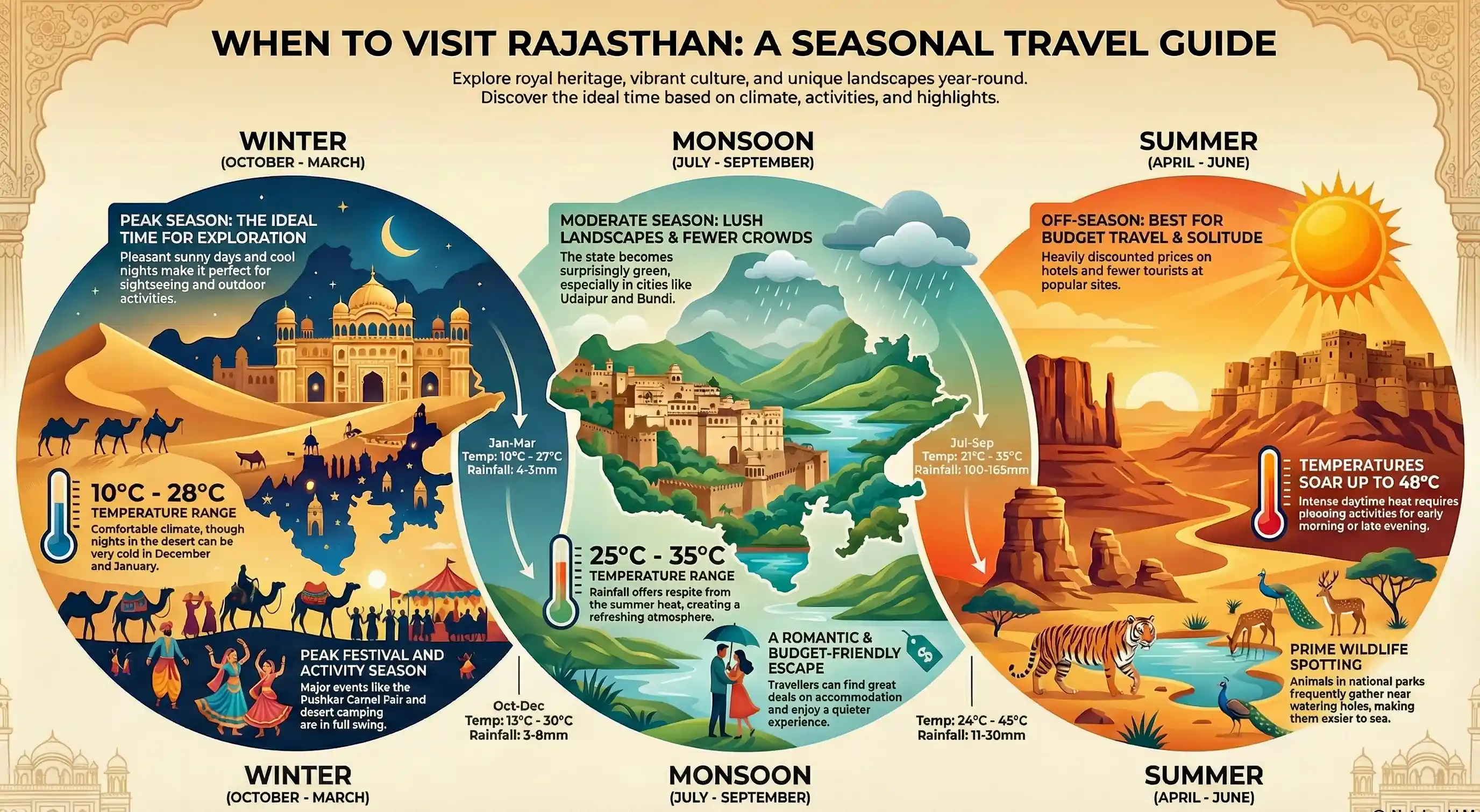
To help you plan your itinerary, the following table summarises the temperature and rainfall patterns across the state throughout the year.
| Season | Months | Temperature (°C) | Tourism Status | Budget |
|---|---|---|---|---|
| Winter | October to March | 10°C – 27°C / 30°C | Peak Season | High (higher hotel & travel costs) |
| Summer | April to June | 24°C – 45°C / 50°C | Off-Season | Low (budget-friendly deals) |
| Monsoon | July to September | 21°C – 35°C | Moderate Season | Medium (mixed pricing) |
Rajasthan Seasonal Weather and Tourists
1. Winter: Best time to Travel (October to March)
Winter is undoubtedly the best time to visit Rajasthan. The weather is pleasant and cool, making it ideal for sightseeing and outdoor activities. This season attracts the most tourists, so it's advisable to book accommodations in advance. The comfortable climate allows you to explore Rajasthan's historical sites, vibrant markets, and cultural festivals without the discomfort of extreme temperatures.
Pros and Cons of Visiting in Winter:
| Aspect | Pros of Visiting in Winter | Cons of Visiting in Winter |
|---|---|---|
| Weather | Mild and pleasant weather makes sightseeing and desert activities comfortable. | Cold desert nights require proper warm clothing. |
| Activities | Best season for forts, markets, safaris, and outdoor exploration. | Crowds can slow down visits at popular spots. |
| Festivals | Cultural festivals add color, traditions, and local energy to the trip. | Festival days attract heavy tourist footfall. |
| Tourism | Lively atmosphere with well-managed tourism services. | Peak season leads to higher prices overall. |
| Planning | Smooth travel experience with full tourist facilities available. | Advance bookings are necessary to avoid issues. |
Pros & Cons of Traveling in Winter
Cities to Visit in Winter:
Jaipur & Jodhpur: Perfect for fort explorations and shopping in vibrant markets.
Jaisalmer: Ideal for camel safaris and overnight stays in the Thar Desert dunes.
Bikaner & Pushkar: Best for experiencing iconic animal fairs and spiritual rituals.
Mount Abu: Features the Winter Festival with traditional dances and exhibitions.
Important Tip: While days are sunny, winter nights in the desert can be freezing, with temperatures sometimes dropping to 0°C or below. Always pack sufficient warm clothing and layers.
2. Summer: Budget and Hill Station Retreat (April to June)
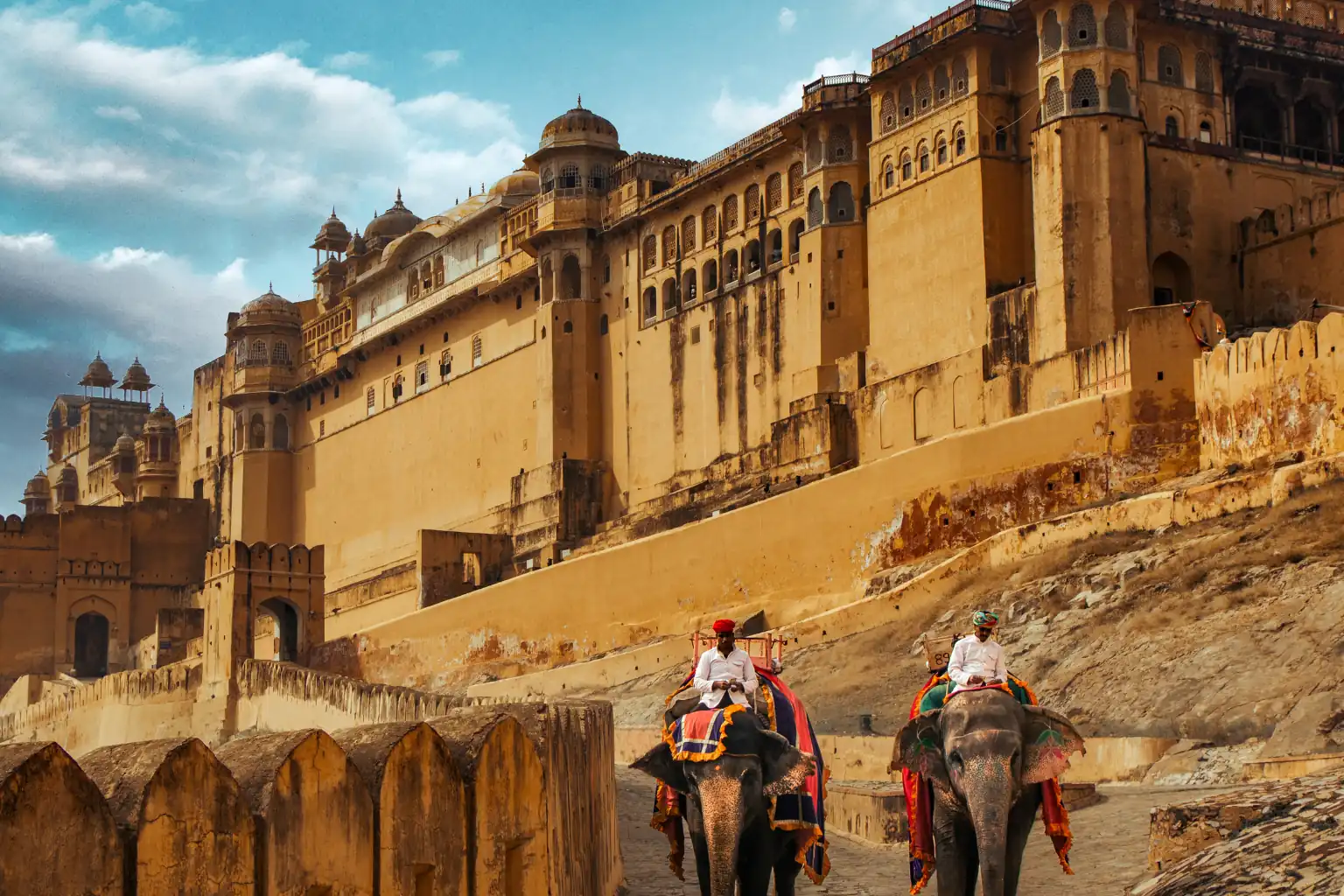
Summer in Rajasthan can be extremely hot, with temperatures soaring up to 48°C (118°F) in some areas. This season is not usually recommended for travel, especially if you are not accustomed to high temperatures. The intense heat can be quite overwhelming, particularly for those planning to explore the outdoor attractions that Rajasthan is famous for. However, if you can withstand the heat, you may find fewer crowds and lower prices during this period, offering a more peaceful experience at popular tourist spots.
Pros of Visiting in Summer
| Aspect | Pros of Visiting in Summer | Cons of Visiting in Summer |
|---|---|---|
| Weather | Quieter season with fewer tourists across major destinations. | Extreme heat can reach up to 48°C, making daytime travel difficult. |
| Crowds & Cost | Lower hotel prices and less crowding at forts and palaces. | Outdoor sightseeing is limited due to intense sunlight. |
| Experiences | Peaceful exploration of landmarks without peak-season rush. | Heat fatigue can reduce travel stamina. |
| Destinations | Best time to visit Mount Abu for a cooler hill-station escape. | Desert regions become uncomfortable during the day. |
| Travel Pace | Slow, relaxed travel with flexible schedules | Requires early mornings, late evenings, and frequent breaks. |
Pros & Cons of Traveling in Summer
Cities to Visit in Summer:
• Mount Abu: As the state's only hill station, it offers a cool breeze, scenic lake views, and the vibrant Summer Festival in May.
• Kumbhalgarh & Ranakpur: These locations remain relatively pleasant compared to the desert plains. Kumbhalgarh is famous for its massive fort and wildlife sanctuary, while Ranakpur is renowned for its intricate Jain temples.
Important Tip: If you visit other cities like Jaipur or Jodhpur, plan your sightseeing for the early mornings or late evenings and stay indoors during the peak afternoon sun. Always carry high-SPF sunscreen, hats, and light cotton clothing.
3. Monsoon: The Romantic Greenery (July to September)
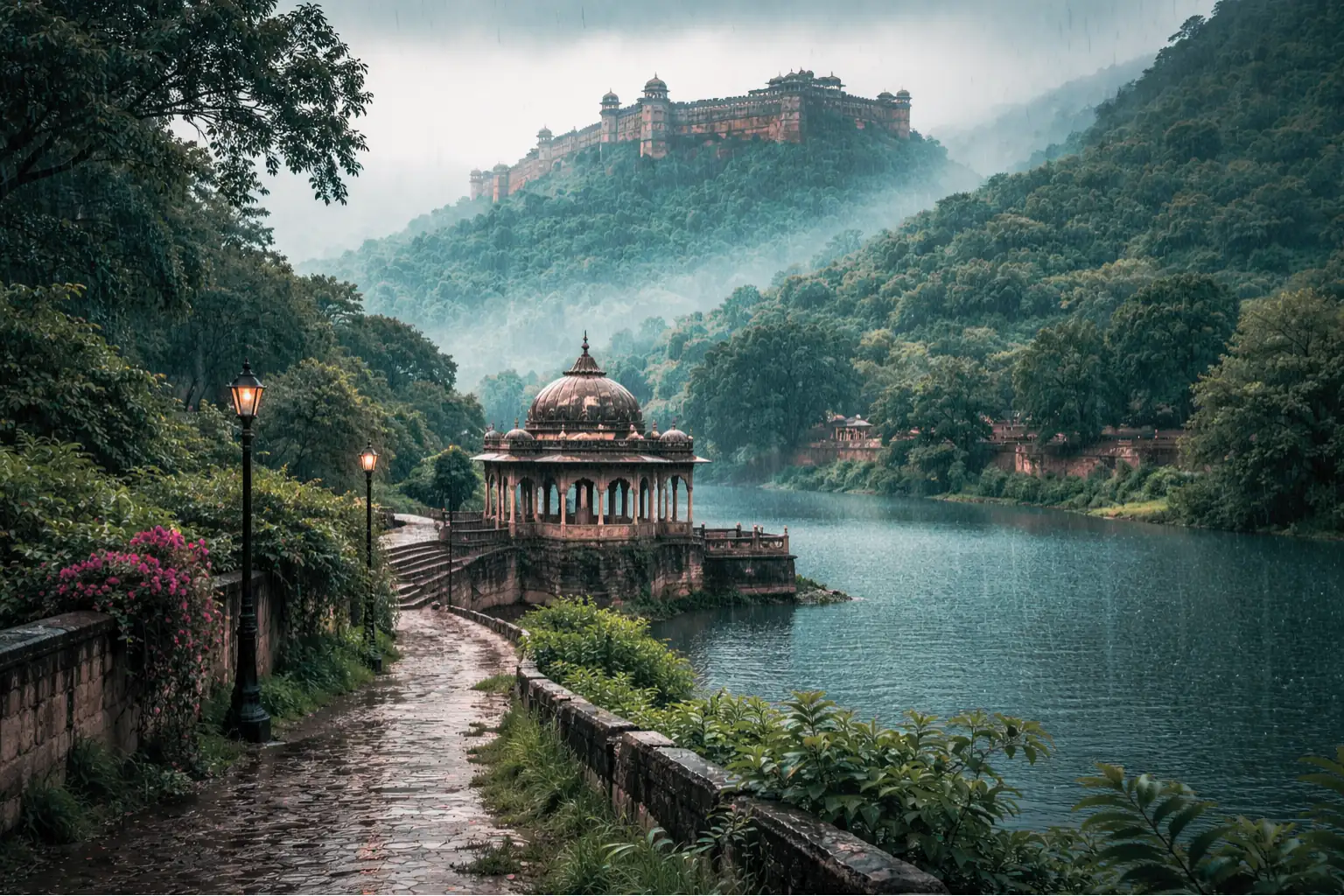
The monsoon season brings respite from the scorching summer heat. While Rajasthan receives less rainfall compared to other parts of India, the landscape transforms into a lush, green paradise. This season is perfect for those who enjoy the freshness of rain and wish to experience Rajasthan's natural beauty. The scattered rains bring a sense of tranquility and rejuvenation to the arid region, enhancing the beauty of its lakes and gardens.
Pros of Visiting in Monsoon
| Aspect | Pros of Visiting in Monsoon | Cons of Visiting in Monsoon |
|---|---|---|
| Weather | Cooler and pleasant temperatures make sightseeing more relaxed than summer. | High humidity can feel uncomfortable for some travelers. |
| Landscape | Green, refreshed scenery creates beautiful views across forts and palaces. | Rain may limit outdoor activities on some days. |
| Photography | Dramatic skies and lush backdrops are ideal for photography lovers. | Cloudy weather can affect lighting conditions. |
| Travel Experience | Calm, romantic vibe suited for couples and slow travel seekers. | Waterlogging or roadblocks may disrupt travel plans. |
| Planning | Fewer tourists allow flexible schedules and quieter stays. | Sudden showers require adaptable itineraries and rain gear. |
Pros & Cons of Traveling in Monsoon
Cities to Visit in Monsoon
Udaipur: Known as the "City of Lakes," it is at its most magical when the lakes are brimming.
Bundi: This "lake city" features landmarks like the Kipling Palace and Nawal Sagar, which look stunning against the green backdrop. In September, Phool Sagar Lake becomes a sea of lotus flowers.
Keoladeo National Park (Bharatpur): The rains rejuvenate this UNESCO-listed park, making it a highlight for nature lovers.
Important Tip: Desert activities like camel rides can be difficult in the monsoon due to wet sand. Instead, focus on road trips, palace tours, and visiting scenic viewpoints. Pack quick-dry clothes and waterproof gear.
Best Season for Rajasthan Tour
Considering the climate and activities, winter is widely regarded as the best season for a Rajasthan tour. The pleasant weather allows you to explore the state without the discomfort of intense heat or rain. During this time, you can partake in various cultural events, explore the grand forts and palaces, and enjoy the vibrant markets. The winter season truly brings out the best of Rajasthan, offering a perfect blend of cultural immersion and sightseeing.
1. Cultural Festivals to Experience
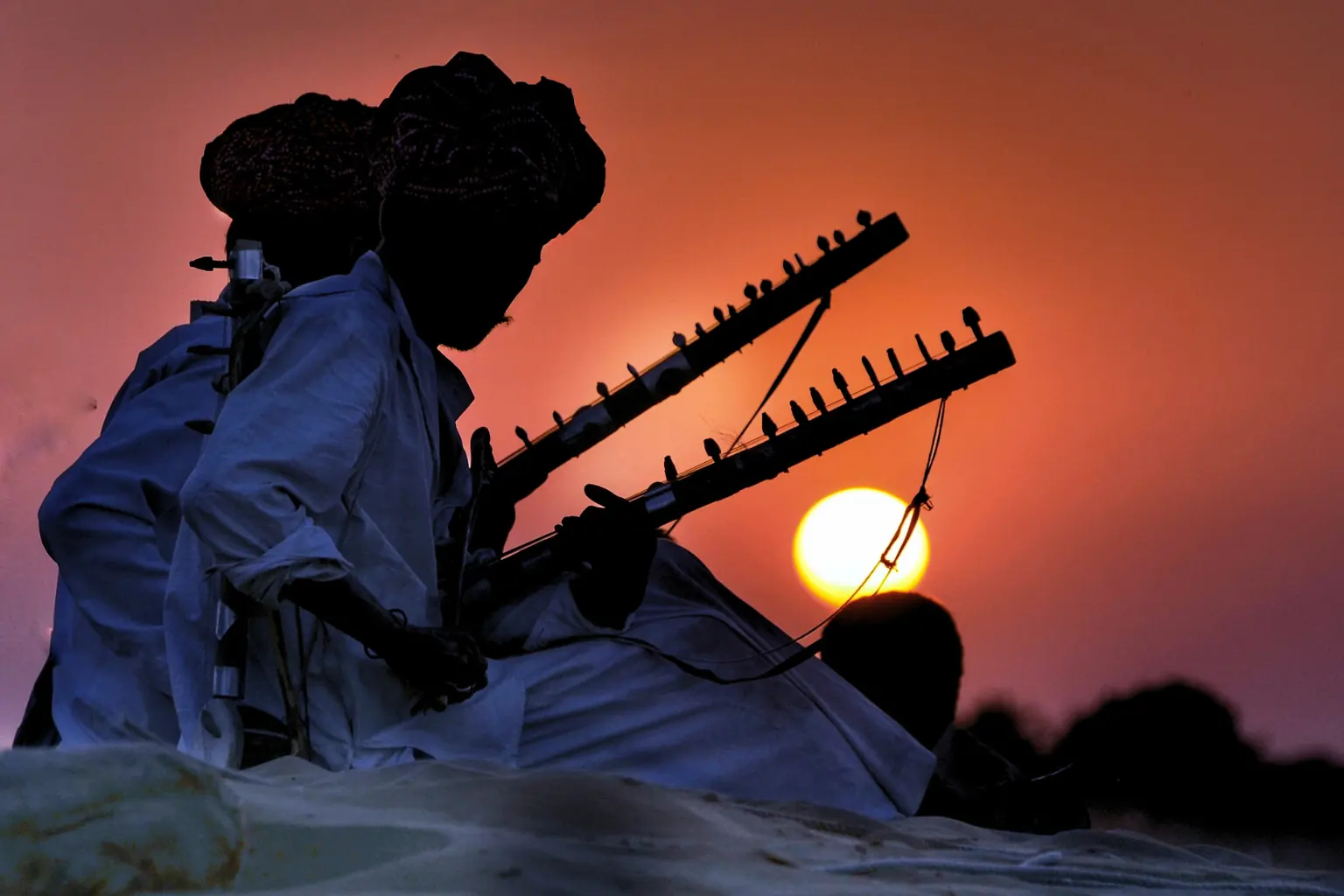
Rajasthan is known for its rich cultural heritage, and visiting during festival season adds a special touch to your trip. Some of the key festivals during winter include:
Diwali (October/November): Experience the Festival of Lights with grand celebrations, fireworks, and traditional sweets. The entire state comes alive with lights, colors, and a festive spirit that is infectious.
Pushkar Fair (November): One of the largest camel fairs in the world, offering a glimpse into Rajasthan's vibrant rural culture. It's a unique opportunity to witness the traditional lifestyle and vibrant community gatherings.
Desert Festival (January/February): Held in Jaisalmer, this festival showcases traditional music, dance, and camel races. The festival provides an authentic experience of Rajasthan's desert culture and traditions.
Best Month to Visit Rajasthan
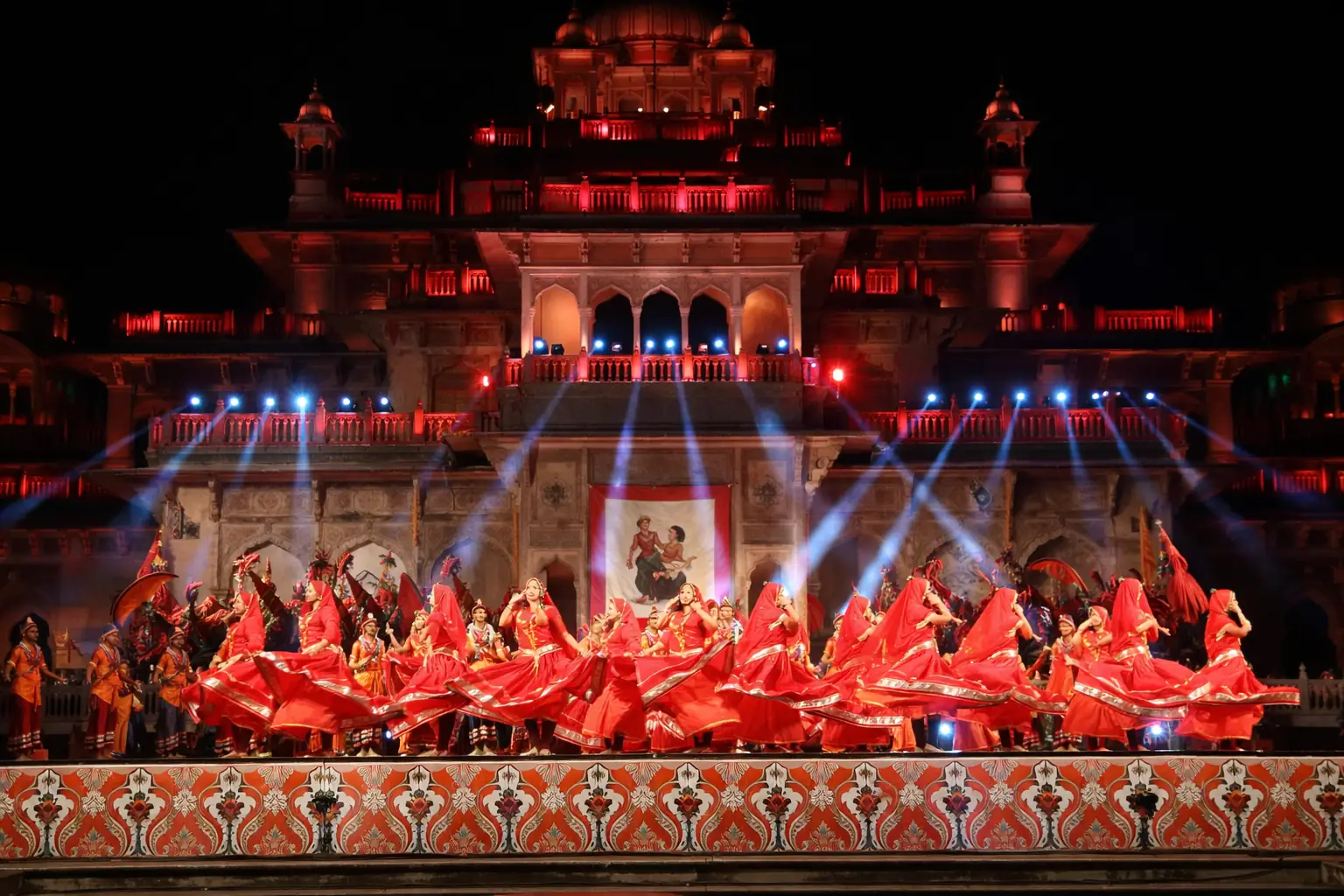
While winter is generally the best season, the months of November to February are particularly the best month to travel Rajasthan. During these months, the weather is cool and dry, making it perfect for exploring both urban and rural areas. The climatic conditions during these months are conducive to long days of sightseeing and participation in outdoor activities.
Why November to February?
Comfortable Weather: Daytime temperatures are mild, ranging from 10°C to 27°C (50°F to 81°F), making it comfortable for sightseeing. The cool breeze and clear skies enhance the travel experience.
Cultural Events: Many of Rajasthan's most famous festivals occur during these months, offering a chance to experience local traditions and celebrations. These events provide a window into the vibrant cultural tapestry of the region.
Wildlife Viewing: National parks like Ranthambore and Sariska are open, providing opportunities for wildlife enthusiasts to spot tigers and other animals. The cooler weather means animals are more active, increasing the chances of sightings.
Planning Your Rajasthan Tour
Book in Advance
Winter is the peak tourist season, so it's wise to book your accommodations and transportation well in advance. Popular destinations like Jaipur, Udaipur, and Jodhpur can fill up quickly. Early planning ensures you have access to preferred accommodations and can secure spots in popular tours and activities.
Pack Accordingly
Depending on the time of year, pack appropriate clothing. Lightweight, breathable fabrics are essential for summer, while warmer layers are necessary for winter evenings. Comfortable footwear is also recommended for exploring the state's vast forts and palaces.
Explore Beyond the Cities
While cities like Jaipur and Udaipur are must-visits, don't miss the chance to explore Rajasthan's rural areas. Places like Bundi, Bikaner, and the Thar Desert offer unique experiences and a glimpse into traditional Rajasthani life. These areas offer a quieter, more intimate perspective of the state's cultural and natural beauty.

Things to Carry
Footwear: If you’re thinking heels or fancy shoes, bhai… don’t. Rajasthan forts are brutal. I wore semi-formals to Amer Fort once and regretted it by the third staircase. Stick to sneakers or walking sandals. In Jaisalmer dunes, sand gets everywhere—closed shoes or just go barefoot like locals. Surprisingly fun.
Clothing: Cotton is your best friend during the day. The sun means business. But desert nights get cold fast. Learned that in Pushkar, shivering over chai. Always carry a light jacket.
Bookings: Winter is beautiful—and packed. Festivals, fairs, full vibes. But if you don’t book early, you’ll pay extra. “Season chal raha hai” is real.
Photography: Everything looks unreal. Forts, colors, people—your phone will fill up fast. Carry extra storage or be ready to delete memories for new ones.
Essentials: Water, wet wipes, and mosquito repellent. No over-smartness here. Rajasthan heat and mosquitoes don’t forgive.
Conclusion
Rajasthan is a land of diverse beauty, offering something for every traveler. Whether you're drawn to its historical grandeur, cultural festivals, or natural landscapes, choosing the right time to visit can enhance your experience. Winter is generally the best season to explore Rajasthan, with its pleasant weather and vibrant cultural events. However, each season has its own charm, so consider your preferences and plan your trip accordingly. By aligning your travel plans with the optimal season, you can fully immerse yourself in the magic of Rajasthan and create unforgettable memories in this enchanting land.