

Karan
Writer
Updated On - Aug 29, 2025
25 min
Published On - Aug 29, 2025
Badrinath Yatra: In the Lap of Nar-Narayan – A BizareXpedition™ Travelogue & Guide
"Join BizareXpedition™ on an unforgettable journey to Badrinath, one of India's holiest Char Dhams. This comprehensive travelogue and practical guide offers an intimate look at the pilgrimage, from the exhilarating road trip through the Panch Prayags to the profound moments at the Badrinath Temple. Dive into the rich cultural tapestry of the Himalayan villages, savor the authentic local cuisine, and explore hidden gems like Mana Village and Vasudhara Falls.
"Join BizareXpedition™ on an unforgettable journey to Badrinath, one of India's holiest Char Dhams. This comprehensive travelogue and practical guide offers an intimate look at the pilgrimage, from the exhilarating road trip through the Panch Prayags to the profound moments at the Badrinath Temple. Dive into the rich cultural tapestry of the Himalayan villages, savor the authentic local cuisine, and explore hidden gems like Mana Village and Vasudhara Falls.
Chapter 1 – The Road Trip to Badrinath
There’s something magical about the start of a journey into the Himalayas. The air feels different the moment you leave the crowded plains and begin climbing into the folds of the mountains. Badrinath is not just a place—it is a feeling, and that feeling begins long before you arrive at the temple. For most travelers, the journey itself becomes the first darshan.
The common starting point for this sacred yatra is Haridwar or Rishikesh. Pilgrims gather here after taking a dip in the holy Ganges, breathing in the chants from river ghats, and feeling the energy of the place. It’s like the Himalayas are calling from a distance. From here, the road stretches ahead—winding, narrow, and full of promises.
As the car leaves Haridwar, the plains fade out and the first bends of the mountains show up. Along the route, little tea stalls and fruit vendors pop up, most of them run by smiling pahadis eager to hand you steaming chai with sweet biscuits. Every pause, every stop has its own significance. One moment you’re sipping ginger tea at a roadside dhaba; the next, you’re catching a glimpse of the Alaknanda sparkling below in flashes through the valleys.
The drive is not just about reaching Badrinath—it’s about the many halts along the way:
Devprayag: where the Bhagirathi and Alaknanda meet to form the holy Ganges. Standing at the confluence, you can feel the power of nature and history, as if the river itself is giving you her blessings for the road ahead.
Rudraprayag: with its quiet charm, where the Mandakini joins the Alaknanda. Many stop here to stretch their legs, grab a small plate of pakoras, and soak in the scenery.
Karnaprayag, Nandaprayag, and Vishnuprayag: each confluence on the way adds another layer of divinity, reminding you that you’re traveling not just through mountains, but through an ongoing spiritual story.
As the journey continues higher, the roads get narrower, but the scenery gets grander. Mountain slopes are dotted with pine and deodar trees. Streams gush from nowhere and cross the roads as if to offer you blessings. The mountains often surprise you with sudden waterfalls tumbling down, forcing everyone to stop, watch, and whisper, “This can’t be real.”
Small towns along the way—like Joshimath—become natural pauses. Joshimath is not just a stopover; it is believed to be the winter home of Lord Badrinath when the temple shuts in snow. Walking through its busy market, sharing hot momos or Maggie noodles in a roadside shack, you realize how the local culture blends devotion with daily life.
The higher you climb, the closer you get to snow peaks. The Panch Dhams shine in the distance, and if luck blesses you with clear skies, you’ll get your first breathtaking glimpse of Neelkanth peak, standing like a sentinel above Badrinath. That sight alone makes every hairpin bend, every rough patch of road, every long hour in the car worth it.
Traveling to Badrinath is not easy—the altitude rises quickly, the cold sharpens, and sometimes landslides force unexpected halts. But that’s the beauty of this journey. It teaches patience. It invites you to let go of your schedule and surrender to the mountains, because here, time moves at its own pace.
For many, the road to Badrinath is as sacred as the destination. Pilgrims sing bhajans inside their vehicles, strangers share snacks along the way, locals open their homes to tired travelers. The road becomes a moving community of faith. By the time you finally approach the temple town of Badrinath, you already feel transformed—lighter, calmer, and deeply connected to the Himalayas.
The journey is not about getting somewhere quickly. It is about giving your soul the space to slow down, to breathe, and to prepare for the darshan of Lord Badri Vishal. Every bend, every river crossing, every confluence is a reminder: Badrinath doesn’t just wait at the end. He is present throughout the journey.
Chapter 2 – Arrival at Badrinath & the First Darshan
The final stretch of road feels like a pilgrimage of silence. By the time the car twists past the army posts and valleys near Mana village, something stirs in the heart. The air thins, the peaks crowd closer, and the dazzling Neelkanth Parvat looms ahead—its icy crown shimmering in sunlight like it’s been carved by gods themselves. You know you are close.
Suddenly, the bustling little town of Badrinath appears, set against the Alaknanda river that rushes past with urgency, carrying snowmelt from the great peaks above. The first thing you notice is the sharp chill, a cold that seeps through woolens and skin straight into the bones. But along with that cold comes a warmth: the buzz of pilgrims, the fragrance of incense drifting out of small roadside shops, and the colorful streamers strung across lanes.
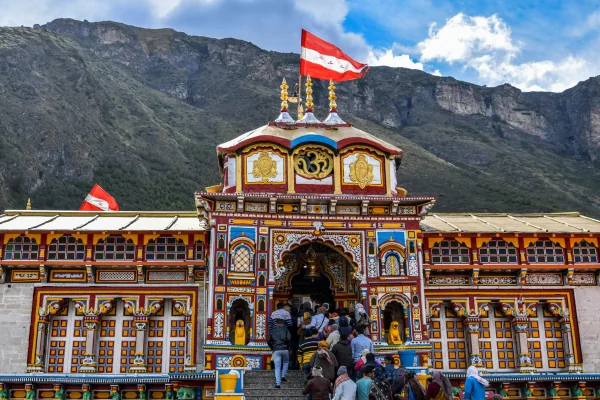
Every pilgrim’s heart quickens at the sight of the Badrinath Temple flag, flapping triumphantly on its golden top. It’s a beacon visible even from a distance, calling devotees to the sanctum.
1. The Approach
Upon arrival, the first pause comes at the Tapt Kund. This is no ordinary hot spring—it is believed to hold divine healing powers. Pilgrims dip their hands or bathe completely, steam rising in the freezing air like an offering to the gods. The warmth of the water feels surreal with snow peaks glaring down. Locals will tell you, “Without this dip, your darshan is incomplete.” And you believe them.
From there, you climb a gentle flight of steps. The air is charged with chants:
“Badri Vishal ki jai! Alakh Niranjan ki jai!”
Strangers echoing the same words suddenly feel like family, all of you bound together in devotion.
The temple itself is unlike any you’ve seen. Its façade is vibrant with bright colors—orange, blue, red—standing in striking contrast to the stark whites and greys of the mountains. The architecture is part Garhwali, part Buddhist-inspired, and wholly divine. You don’t see stone alone; you feel centuries of faith carved into every corner.
2. The Darshan Experience
Stepping into the sanctum, the world quiets down. The crowd presses closer, priests chant slokas, bells ring in steady rhythm, and then—there He is.
The black stone idol of Lord Badri Narayan, seated in padmasana, radiating serenity that words can never capture. Tiny yet powerful, His presence fills the entire temple. Around Him stand Nar-Narayan, Garuda, and Kubera, completing the cosmic family. Some bow with tears, some chant fervently, others stand frozen. Everyone, though, feels that same intensity of being seen by the Lord Himself.
It’s easy to forget time here. For a moment, the journey, the tiredness, the cold—all dissolve. What remains is a stillness, a silence that feels eternal. People say darshan is an experience, not a sight. And that’s exactly what it is.
3. Life Around the Temple
Once you step out, life bustles back. The temple courtyard comes alive with pilgrims resting on stone floors, feeding pigeons, sharing prasad. The fragrance of fresh marigold garlands hangs heavy in the air. You’ll find shopkeepers calling out “Prasad le jaiye!” offering nuts, sweets, and souvenirs blessed in the temple.
And beyond the main shrine, the Himalayas never let you forget their presence. The Alaknanda roars beside the temple, pure and untamed. Snow peaks glitter like eternal witnesses to the faith of millions who walk into this valley year after year.
4. The Evening Aarti
If the morning darshan fills your heart with calm, the evening aarti overwhelms it with energy. Imagine hundreds of devotees standing together, holding lamps that flicker against the night winds, chanting mantras in unison. The temple glows golden, while the dark Neelkanth peak in the background looks like a silent guardian. Fire, water, mountain, and sky—all seem to merge in that one moment.
Pilgrims walk back slowly after the aarti, hearts heavy with devotion but strangely light with joy. For many, this single darshan is worth the entire lifetime. For others, it is only the beginning—they linger, return the next morning, or spend days soaking in the spiritual aura of this town.
5. Reflection
Reaching Badrinath is about more than getting to a temple. It is about crossing into another dimension of faith. Standing there, between rushing rivers and towering peaks, you don’t just see Lord Badrinath—you feel Him in the wind, the cold water, the chants, and even in your own heartbeat.
The trek, the roads, the halts—all vanish the moment you stand before Him. What remains is a deep knowing: this journey was not just travel. It was a calling answered.
Chapter 3 – Local Attractions & Experiences
Badrinath is not only about the temple—it is also about everything that surrounds it. The small valley is dotted with sacred spots, story-laden villages, and natural wonders that make the entire pilgrimage a more complete experience.
Walking out of the temple lanes, you’ll find yourself entering a tapestry of history, mythology, and raw Himalayan beauty. Every corner holds a story, and each story makes the journey richer
1. Mana Village – The Last Village of India
Just a few kilometers ahead of Badrinath lies Mana, officially recognized as the last village of India before the Tibetan border. The drive or walk to Mana feels peaceful—the air thinner, the landscape rugged, and the surroundings quieter than the temple town.
As you enter, the village greets you with traditional stone houses, painted wooden doors, and smiling locals knit in woolens, selling hand-made shawls, socks, and Himalayan herbs. Mana is more than geography—it is mythology embodied.
- Vyas Gufa: The cave where sage Vyas is believed to have dictated the Mahabharata to Lord Ganesha. Even today, it feels like the silence inside the cave is still echoing with ancient words.
- Ganesha Gufa: Close by, another cave where Ganesha wrote the verses. Standing between these two caves, you cannot help but imagine the epic unfolding right there.
- Bheem Pul: A massive stone slab across the Saraswati river, believed to have been placed by Bhima for his wife Draupadi to cross during their final journey to heaven. Watching the mighty Saraswati crash into rocks below takes your breath away—even nature seems dramatic here.
BizareXpedition™ Tip: Sip a cup of tea at “India’s Last Tea Stall” at Mana—it’s an experience more about emotion than taste. Don’t forget to buy local woolens directly from villagers; it supports their fragile economy.
Safety Note: Mana sits at an altitude of nearly 10,000+ ft. Walk slowly. Overexertion can cause sudden dizziness or breathlessness. Always carry warm layers—weather shifts within minutes.
Reflection: Standing at Mana, looking beyond into Tibet, you realize borders are human creations. The Himalayas don’t recognize them. Here faith, culture, and nature merge seamlessly.
2. Vasudhara Falls – A Heavenly Cascade
About 9 km trek from Mana lies Vasudhara Falls, a dramatic sheet of water plunging from 400 ft, believed to only touch the pure in heart. Locals say if the water sprinkles on you, you are blessed. The trek itself, though slightly demanding, is a journey across wild mountain paths where every turn reveals striking peaks and valleys.
The sound here isn’t just a waterfall—it feels like the voice of the Himalayas themselves.
BizareXpedition™ Tip: Plan this trek in the morning to return by daylight. Carry light snacks, water, and always walk at your pace. The air thins quickly.
Safety Note: Weather is unpredictable. Rain or sudden snow can make rocks slippery. Good trekking shoes are non-negotiable. Avoid if traveling with elderly or if easily tired.
Reflection: Watching Vasudhara tumble from the skies, you cannot help but think of life’s flow—so powerful, so relentless, so free.
3. Charan Paduka – Footprints of the Divine
A short trek from Badrinath temple, Charan Paduka is a rock believed to bear the footprints of Lord Vishnu. The climb is steep in parts, but the reward is a panoramic view of the Badrinath valley. Standing here, gazing down, you understand why the Lord may have paused His steps here before moving upward toward the temple grounds.
BizareXpedition™ Tip: Start early morning for the climb. Sunrise over the valley from Charan Paduka is unforgettable for photographers and seekers alike.
Safety Note: Carry a walking stick if unsure about trekking. The stones are loose; avoid during rains.
Reflection: Charan Paduka is less about the footprints on rock, more about the footprints it leaves in your spirit—a reminder of humility in the face of greatness.
4. Alkapuri – Source of the Alaknanda
For trekkers and serious seekers, Alkapuri is the glacier where the Alaknanda river originates. It is also said to be the abode of Kubera, the lord of wealth, and Gandharvas. The trek is longer and requires fitness, but arriving at the shimmering glacier amid stark silence is nothing short of surreal.
BizareXpedition™ Tip: Attempt Alkapuri trek only with proper guides or trekking groups. It’s remote and not commercialized.
Safety Note: This is not a casual stroll. Oxygen levels dip significantly, and sudden altitude sickness is common. Only attempt if physically prepared.
Reflection: The glacier feels alive—crackling, dripping, moving. To sit here, listening to its music, is to witness the source not just of a river, but of stories, faith, and civilizations
5. A Village Walk & Local Interaction
Beyond myth and mythologies, Badrinath town and nearby villages hold little gems of daily life. Speak to locals—hear stories that never feature in guidebooks. Shop for Bhotiya woolens, sip hot bowls of thukpa (Tibetan noodle soup), and watch evenings sink into quietness while smoke rises from wooden rooftops. It grounds you after days of divinity.
BizareXpedition™ Tip: Buy local honey and Himalayan herbs. They are organic and much cherished. But avoid plastic-packaged souvenirs; choose sustainable.
Safety Note: Respect local customs. Do not photograph people without permission—this land is sacred to them, not just to visitors.
Reflection: Sometimes the most divine encounters are not with gods but with humans—listening to their laughter, sharing their food, and feeling their warmth.
6. Closing Thoughts for Chapter 3
Exploring beyond the main temple reveals that Badrinath is not one shrine but a living, breathing cosmos. Caves, rivers, footprints, waterfalls, villages—all tell you the same truth: the Himalayas are scriptures written in stone and ice. Every step you take here becomes a verse.
Chapter 4 – Culture & Food in Badrinath
1. A Culture Rooted in Faith
Life in Badrinath is inseparable from devotion. The entire town revolves around the temple rhythms—the morning bells, the chanting priests, the bustling market by day, and the quiet hush after evening aarti. Unlike crowded cities, here spirituality is not an event; it is everyday life.
Locals, mostly Garhwali and Bhotia tribes, blend Himalayan resilience with warm hospitality. You’ll often find women knitting woolens outside their homes, children running barefoot despite the chilling cold, and men trading wool, herbs, or yak-wool products. Seasonal migration is common—families shift to lower altitudes during harsh winters when the temple closes, and return once the portals reopen in April/May.
Though simple, their life speaks of courage and adaptability. To live at 10,000 ft, battling climate, terrain, and isolation, is no small feat. Yet the smiles you receive here—genuine and unhurried—stay with you long after you leave.
Reflection: In big cities, luxury often defines happiness. In Badrinath, faith and community do. It makes you wonder, maybe simplicity is the real abundance.
2. Music, Festivals & Joy
Festivals here are more than celebrations—they are oxygen for the community. Locals sing folk songs (jhoda, chhapeli) that echo across valleys. During Mata Murti Ka Mela, devotees gather to honor the mother of Lord Narayan, and the entire valley glows with colors. The atmosphere lightens; drums beat, conch shells blow, and pilgrims forget the hardships of mountain travel.
The closing ceremony of the Badrinath temple (around November) is especially moving. When the idol is ceremoniously shifted to Joshimath for the winter, thousands gather, crying and singing simultaneously, as if saying goodbye to a dear one.
BizareXpedition™ Tip: If you can, time your trip with the opening or closing ceremonies. The raw emotion of the locals will turn your pilgrimage into something unforgettable.
3. Food in Badrinath – Simple Yet Soulful
Mountain food isn’t about luxury—it’s about warmth. After a cold day outdoors or temple darshan, even the simplest bowl of dal feels soothing to the soul.
Common flavors include:
- Aloo ke Gutke – spiced potatoes cooked with local herbs, eaten with puris.
- Chainsoo & Kafuli – traditional Garhwali lentil and spinach curries. Heartwarming and full of strength.
- Mandua ki Roti & Jhangora ki Kheer – rustic millet-based meals that locals swear by for energy.
- Thukpa & Momos – a Tibetan influence, often sold in tiny eateries with smoky, dimly lit interiors.
- Prasad halwa – sweetened semolina served after darshan, small in portion but full of blessing.
Food here is less of a gourmet chase and more of a soulful companion to the journey.
BizareXpedition™ Tip: Try eating at small dhabas run by locals instead of large tourist hotels. The food is more authentic, and your contribution directly supports remote families.
Safety Note: Stick to freshly cooked vegetarian food. Non-vegetarian meals are discouraged near the temple by tradition. Also, avoid raw salads or street-side water, as hygiene is limited in high altitude. Carry personal medicine for stomach troubles—they’re common due to altitude change.
4. Tea Tales & Evening Conversations
Evenings in Badrinath are often marked by cups of steaming chai. Tiny stalls lining the streets serve ginger tea, Maggi noodles, and pakoras, and pilgrims huddle around stoves, blowing warm breaths into the icy air. Conversation flows—travel stories, shared struggles of the trek, or reflections on darshan in the temple. People from entirely different corners of India, who may never meet again, connect like family over a shared cup of tea.
Reflection: It’s beautiful how travel strips away barriers. In the Himalayas, it doesn’t matter whether you’re rich or poor, young or old—when you sip chai in the cold, you’re simply one humble soul seeking warmth together.
5. Closing for Chapter 4
Culture in Badrinath is simple, spiritual, and grounded in survival, yet radiant in its joy. Food is humble, not fancy, but full of heart. Together, they remind you that this yatra is not just about gods and temples—it is also about people and flavors, conversations and communities.
Every prayer, every bowl of dal, every smile on a villager’s face—all blend to create the true taste of Badrinath.
Chapter 5 – Practical Travel Guide to Badrinath
After soaking in the stories and aura of Badrinath, let’s get real with the practical side: how to reach, where to stay, what to pack, and how to plan this holy journey smoothly. Because while the Himalayas bless, they also test.
1. How to Reach Badrinath
- By Road:
- Badrinath is connected by motorable roads but only accessible during summer months (May–October). Most yatris begin at Haridwar or Rishikesh. From here, shared jeeps, buses, or private taxis head upward. The road follows the Alaknanda river, crossing the five sacred confluences (Panch Prayag) before reaching Joshimath and finally Badrinath.
- By Air:
- The nearest airport is Jolly Grant Airport (Dehradun), about 310 km away. From here, continue by road or book helicopter shuttles to nearby helipads.
- By Train:
- Rishikesh railway station is the closest major railhead. From there, taxis and buses are available.
- By Helicopter:
- Luxury seekers can opt for helicopter services from Dehradun to Badrinath. The ride is short (about 1 hour) but usually expensive.
BizareXpedition™ Tip: Break your road journey into at least two days. Staying overnight at Rudraprayag or Joshimath makes the ride enjoyable, not exhaustive. Plus, acclimatization becomes easier.
2. Best Time to Visit
- Summer (May–June): Pleasant during the day, chilly at night. Most crowded.
- Monsoon (July–Aug): Avoid if possible. Landslides are frequent and roads unpredictable.
- Autumn (Sept–Oct): Ideal—clear skies, fewer crowds, crisp air.
- Winter (Nov–April): Temple is closed due to snow. The idol is moved to Joshimath.
Safety Note: Always check the official Char Dham yatra calendar issued by Uttarakhand govt. Do not attempt off-season—roads shut suddenly.
3. Food & Water
- Vegetarian meals only—meat, alcohol, and even eggs are discouraged near the temple.
- Expect thalis (dal, rice, chapati, sabzi), Maggi, pakoras, and tea.
- Packaged water is available but carry purification tablets if trekking further (like Vasudhara or Alkapuri).
Safety Note: Stick to hot, cooked items. Avoid raw salads and uncovered sweets. Altitude already strains the stomach; don’t challenge it further.
4. Health & Fitness
- Altitude: Badrinath is at 10,800 ft. Mild breathlessness, headaches, or fatigue are normal.
- Preparation: Walk daily before the trip. Stay hydrated. Carry an ORS packet for energy.
- Medical: A small government dispensary exists but carries limited stock. Essential personal medicines must travel with you.
BizareXpedition™ Tip: Carry a thermos for hot water. At high altitude, sipping warm liquid every hour works wonders for acclimatization
5. Packing Checklist
- Woolens (thermal sets, gloves, muffler, cap).
- Comfortable trekking/camping shoes with grip.
- Raincoat/poncho (weather is unpredictable).
- Flashlight/headlamp.
- Small daypack and water bottle.
- Personal first aid kit (basic medicines + altitude-specific).
- ID proof (mandatory for yatra permits).
Safety Note: Pack light but smart. A heavy backpack in thin air will exhaust you.
6. Connectivity & Facilities
- Mobile Network: Patchy. Jio and BSNL work intermittently, others unreliable.
- ATMs: A few exist but aren’t dependable. Carry enough cash.
- Electricity: Frequent outages. Keep a power bank fully charged.
Reflection: The lack of connectivity becomes a blessing—forcing you to disconnect from screens and reconnect with the mountains, rivers, and silence within.
7. Estimated Costs (per person approx).
- Budget Trip (bus + dharmshala): ₹7,000–₹10,000
- Comfort Trip (private taxi + mid-range hotel): ₹15,000–₹18,000
- Helicopter Package: ₹80,000+ depending on charter type
BizareXpedition™ Tip: Travel in small groups of 4–6. Taxi costs split among friends make the journey affordable and fun.
8. Travel Etiquette in the Himalayas
- Respect local sentiments—remove shoes before entering sacred sites.
- Avoid blasting music in the open valleys—remember, this is not a picnic but a yatra.
- Carry back your plastic waste. Badrinath is fragile, and every wrapper left behind scars its beauty.
Safety Note: Do not attempt sudden stunts like river dips outside designated Kunds. Alaknanda is swift, icy, and merciless.
9. Closing Thought for Chapter 5
Badrinath is not a comfortable holiday—it’s a Himalayan pilgrimage. But with a little planning, the journey becomes less about hassle and more about experience. Practical planning ensures your mind stays free to absorb the serenity, the darshan, and the beauty around.
Reflection: A good itinerary doesn’t cage you—it frees you. Here in Badrinath, when roads are tough and weather unpredictable, preparation is devotion in itself.
10. Accommodation
Badrinath has all ranges:
- GMVN guesthouses (government rest houses): Budget-friendly, basic, reliable.
- Ashrams/Dharmshalas: Like Birla Dharamshala, catering to pilgrims with simple rooms and sattvik meals.
- Hotels & Lodges: Growing in number, especially around the main road. Rooms are modest but warm beds after icy darshan feel divine.
BizareXpedition™ Tip: Always book in advance during peak season. Rooms fill fast, and walk-ins usually end up in overcrowded dorms.
Chapter 6 – Conclusion: The Journey Beyond the Journey
The road to Badrinath begins with excitement, winds through hardships, and ends in something deeper than satisfaction—it ends in surrender. By the time you walk out of the temple town, away from the roar of the Alaknanda and the shadow of the Neelkanth peak, you realize the pilgrimage has changed you in ways words cannot fully capture.
What seemed at first like a physical trek across winding mountain roads turns out to be a spiritual trek inward. Every bend in the road, every dip in the kund, every glimpse of snow and stone has a quiet message: the divine is not just a destination, but the journey itself.
1. What Stays With You
- The sight of pilgrims chanting together in buses and cars, weaving a moving river of faith through the mountains.
- The warmth of villages like Mana, where myth and daily life merge in simple conversations and steaming cups of tea.
- The solemn darshan at Badrinath temple, with its chants rising above cold air, filling the heart with silence and strength.
- The unexpected friendships over chai, the laughter shared at roadside dhabas, the comfort of strangers suddenly becoming family.
These are not just travel memories—they are impressions on the soul.
2. The Himalayas as a Teacher
The Himalayas don’t pamper you. The altitude stings, the cold bites, the roads test patience. But within those challenges lies their greatest gift. Every obstacle is a reminder to slow down, let go, and trust.
BizareXpedition™ Tip: Carry back not just photos, but lessons—patience, humility, and gratitude. These are worth more than any souvenir.
Safety Note: The mountains demand respect. Travel prepared, travel cautiously, but above all, travel with reverence.
Reflection: You came seeking Lord Badrinath, but in the process, you found pieces of Him in rivers, in food bowls, in conversations, and in your own heartbeat. Maybe that was the real purpose of the yatra all along.
3. The Call to Return
As the temple doors close for winter, locals migrate down the slopes. Yet pilgrims too carry with them the seed of return. Once you’ve stood before Badri Vishal, once you’ve felt the silent strength of Neelkanth watching over the valley, you know this isn’t goodbye. It’s only “until next time.”
Because Badrinath doesn’t just live in stone walls and snow peaks—it lodges itself inside you. Long after you’ve returned to the plains, into the noise of daily life, a part of you still walks on those mountain paths, still hears the temple bells, still feels the chill of the Alaknanda.
And one day, the call returns. The mountains whisper again. And you pack your bags, ready for another yatra, another surrender.
4. Final Bow
The Badrinath Yatra is more than ticking a pilgrimage off a list—it is about being cradled in the lap of Nar-Narayan. It is about stepping into a world where gods breathe through mountains, where devotion flows like rivers, and where you, for a few sacred days, feel lighter, truer, closer.
Every pilgrim comes to ask something of the Lord. But many leave realizing: the biggest blessing was already given—the chance to walk these paths, to breathe this air, to feel this presence.
Reflection: You don’t complete the Badrinath Yatra. The Yatra completes you.